Advertisement
PostMag
Life.Culture.Discovery.
Living heritage of Hong Kong
MagazinesPostMag

Preview of the Hong Kong factories turned design hub The Mills as complex nears completion

Three repurposed factories in Tsuen Wan to deliver exhibition space, fashion catwalk shows and co-working opportunities for homespun innovation

Reading Time:6 minutes
Why you can trust SCMP
Nam Fung Textiles, in Tsuen Wan, in the late 1960s.
Enid Tsui

When the hoardings come down at The Mills, the four years spent on rejuvenating the cluster of disused cotton mills in Tsuen Wan will not be immediately apparent – and the architects wouldn’t have it any other way. “We didn’t try to change the external look of the buildings at all. It would have been too easy to erase the past. This is all about augmenting the past,” says Ray Zee, head of design at Nan Fung Group’s Hong Kong property division and former assistant professor of architecture at the University of Hong Kong.

Zee was seconded to this unusual project by the upmarket developer in 2014, and recently took Post Magazine on an exclu­sive tour of the property before its opening later this year.
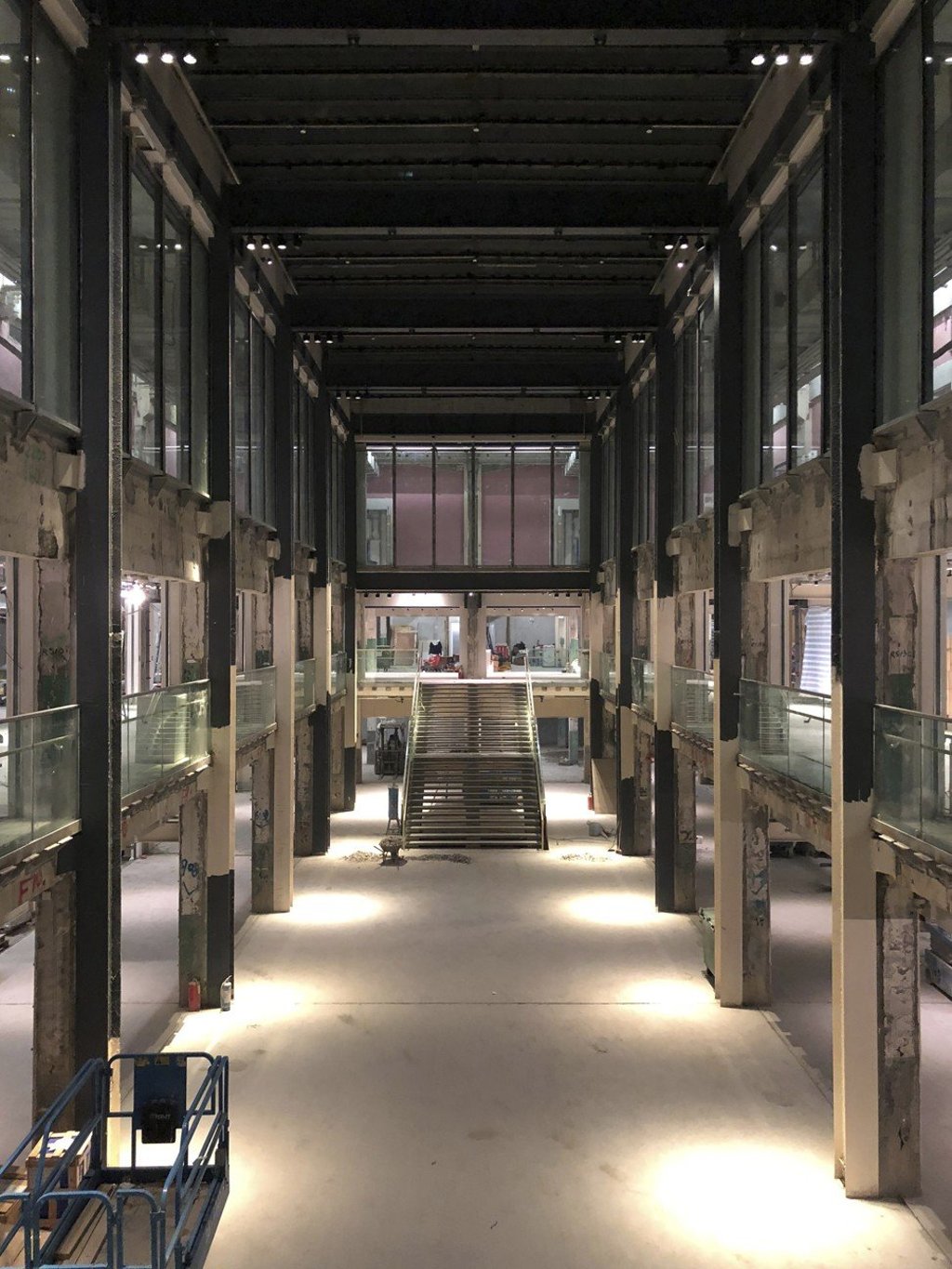
An atrium of The Mills during refurbishment.
In 2010, the Hong Kong government rolled out a policy making it easier and cheaper for industrial buildings that are at least 15 years old to be converted for non-industrial use. It had, after all, already been decades since the bulk of Hong Kong’s factories had moved to the mainland and Southeast Asia.
Advertisement

The buildings known as Mill 4, Mill 5 and Mill 6 were built in the 1950s and 60s by Chen Din-hwa, the late founder of Nan Fung. Chen had moved to Hong Kong from Ningbo, in Zhejiang province, when the Communists took power in 1949, and proceeded to build the city’s biggest yarn-spinning business, Nan Fung Textiles, becoming known as the king of cotton yarn. Mills 1, 2 and 3 were knocked down in the 80s, a few years after China’s paramount leader Deng Xiaoping opened up the mainland for outside investment. But, surprisingly, the family business left the three remaining low-rise buildings standing, even though the spinning business closed in the 2000s. Nan Fung had, by this time, become a property developer and the temptation to knock them down and turn the old mills into some­thing far more valuable must have been strong.
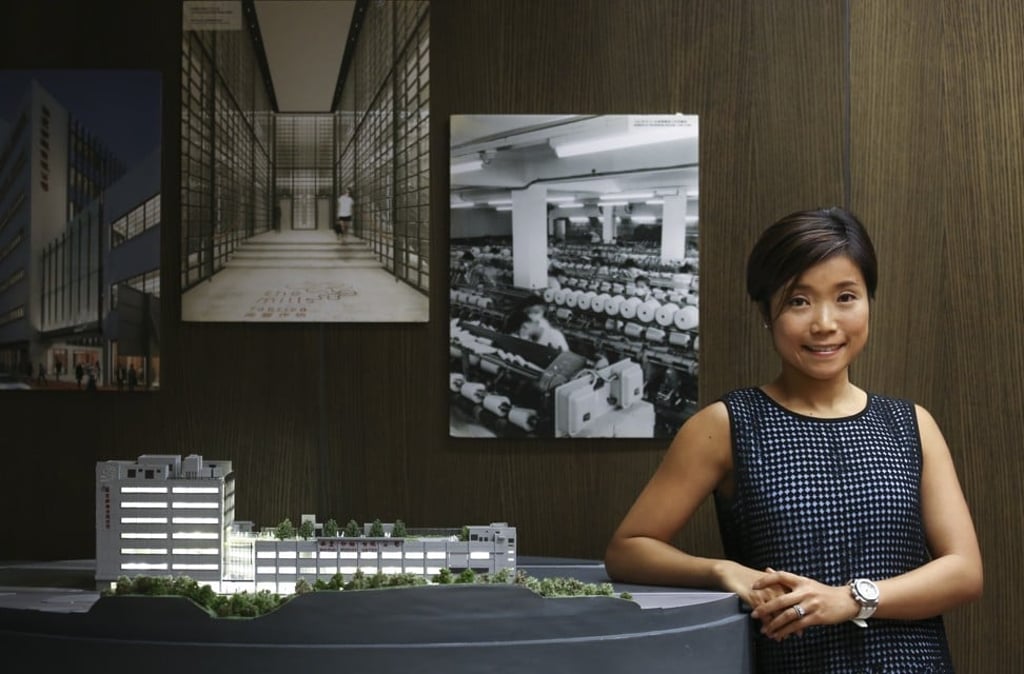
Vanessa Cheung, Chen’s granddaughter and head of Nan Fung’s Hong Kong property development business, convinced the company to preserve the site on which its fortune was built (after all, Nan Fung – which had the cash last year to pay HK$24.6 billion for a plot of land in Kai Tak – could afford to preserve its birthplace).
Advertisement
Vanessa Cheung, managing director of Nan Fung Group and granddaughter to its founder, with a model of The Mills redevelopment, at Nan Fung Tower, in Hong Kong. Picture: Jonathan Wong
There is, in fact, a fashion for nostalgia in Hong Kong – a result of the city’s confidence being undermined by the mainland, formerly its large but poor-relation neighbour, becoming increasingly affluent and assertive. It was all very different when refugees from China flocked to the then-British colony to start their lives from scratch, even though some, like Chen, escaped with assets. Buildings like the old mills in Tsuen Wan are seen as symbols of a never-say-die spirit and the potential for dreams to come true.
Advertisement
Select Voice
Choose your listening speed
Get through articles 2x faster
1.25x
250 WPM
Slow
Average
Fast
1.25x