How Hong Kong’s arts scene has changed in 25 years and the challenges to come as its cultural planning becomes more aligned with mainland China
- Voices from across Hong Kong’s arts spectrum talk about where the industry is heading, the risks it faces and how it can maintain its edge in the region
- To many, nothing is as big a challenge as local politics and the sense that the freedoms enjoyed in the city are ebbing away

Twenty-five years ago, a curious symbol of Hong Kong independence appeared in an art exhibition to mark Britain’s handover of its colony of 156 years to China.
The exhibition was “Hong Kong Incarnated – Museum 97: History, Community, Individual”, curated by the then director of the Hong Kong Arts Centre, Oscar Ho Hing-kay. Ho used pseudo-archaeological materials to make fake ancient records of a half-man, half-fish tribe indigenous to the city’s Lantau Island. These beasts – fleshed out through a sculpture by Jimmy Keung Chi-ming – had no ties to any external notion of nationality, ethnicity and culture. In a city known for its pragmatism, the myth of these creatures would become increasingly entrenched, aided by visual and performance artists who would build on the idea and run away with it.
During the same period, another totem of defiance was installed in the city: the 8m-tall (26-foot) Pillar of Shame by Danish artist Jens Galschiot, a commemoration of the victims of the Tiananmen Square crackdown, which took place in Beijing, China, in 1989. The statue was eventually installed at the University of Hong Kong (HKU) in 1998.
These two politically inspired works spawned a wave of what art historian David Clarke called “handover art”: art that reflected both a concern for the future of Hong Kong and widespread retrospection on the city’s identity brought about by the change in sovereignty.
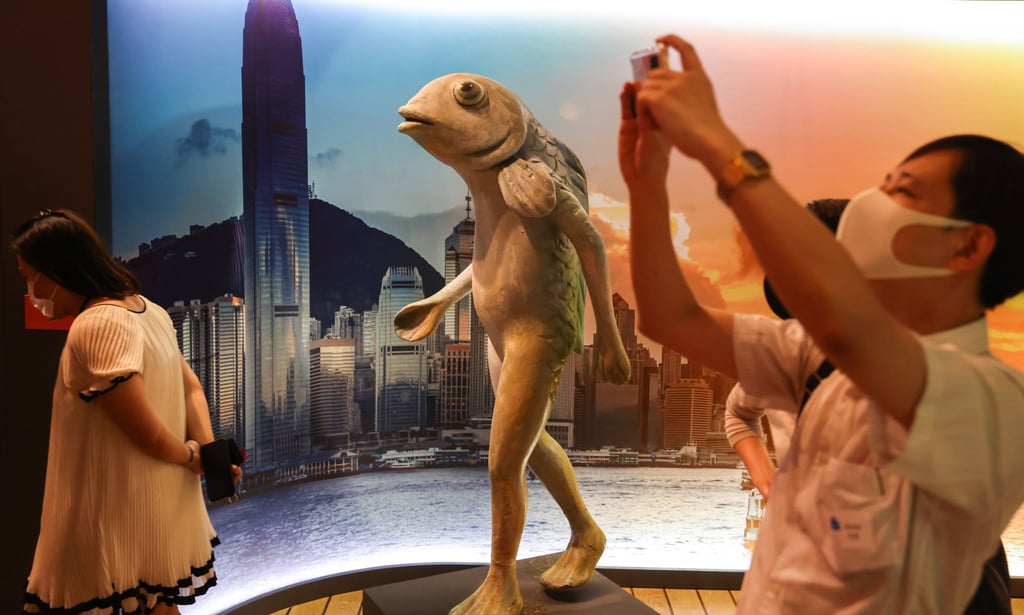
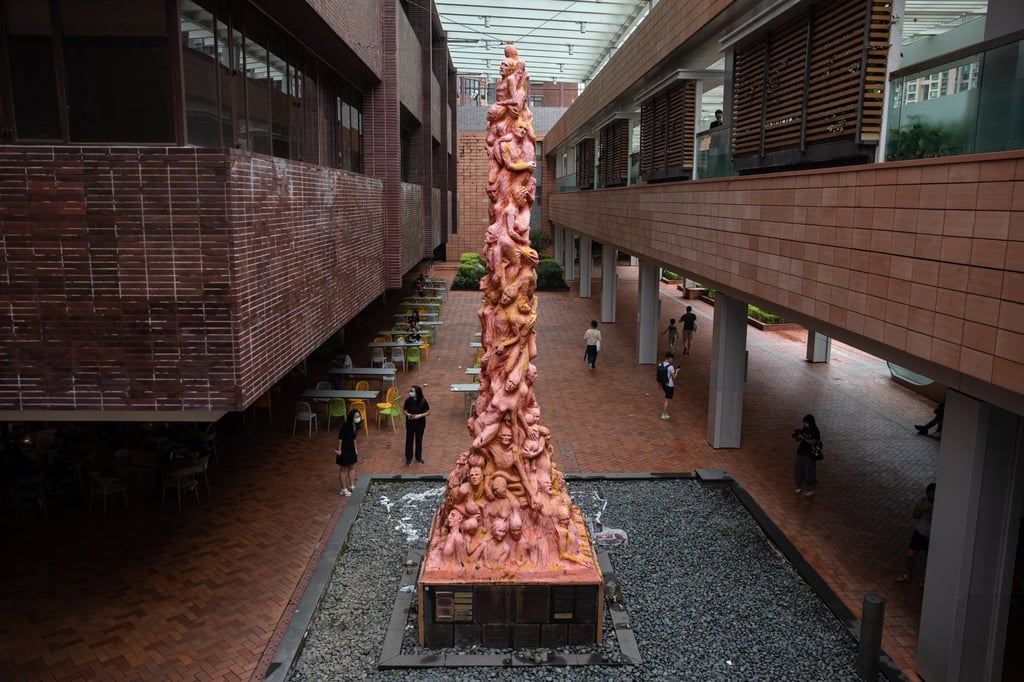
Those concerns would become less pronounced in the arts as the years immediately after the handover saw less change than people had feared. But they have come back with a vengeance in the build-up to the 25th anniversary of the Hong Kong Special Administrative Region.