South China Sea: 10 years after Hague ruling, how has the Philippines’ stance evolved?
Officials and analysts say Manila’s deterrence strategies can now make China ‘at least hesitate’, even though there is still much to be done


The tribunal ruled that China’s nine-dash line had no legal basis and that it had violated Manila’s sovereign rights in its exclusive economic zone, though it did not decide which country owned the disputed reefs and features.
China rejected the proceedings and the ruling, saying the tribunal had no jurisdiction and insisting it had sovereignty over the disputed features and adjacent waters.
Beijing argues the tribunal had no jurisdiction because the case touched on sovereignty and maritime delimitation, matters it says are outside compulsory dispute settlement under Unclos. In a 2014 position paper, China said the tribunal “manifestly has no jurisdiction” and that the Philippines had violated agreements to settle disputes through negotiation.
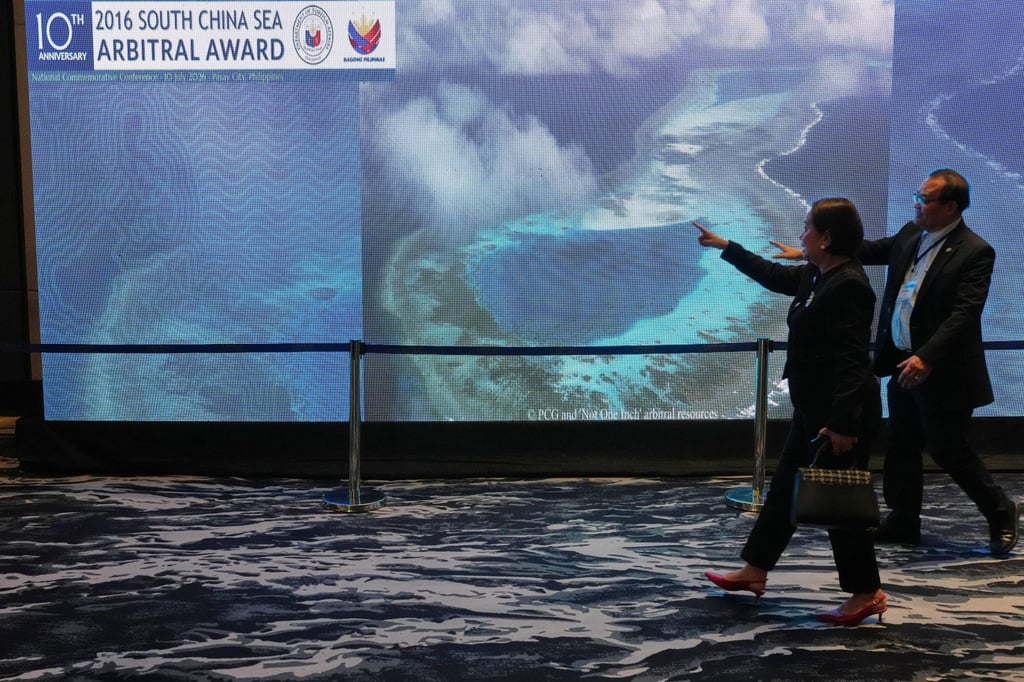
The Philippines and its supporters reject that argument, saying the award is final and binding under Unclos. But Beijing has since remained locked in a diplomatic row with Manila in the contested waterway, with tensions escalating into vessel clashes.