Malaysia to defend palm oil with Indonesia, will invest in Nusantara
- Widodo, Anwar to increase cooperation in palm oil market after EU plans to phase out imports of the commodity over deforestation fears
- Among other issues discussed, Malaysia will also look to boost investment in new Indonesian capital to benefit areas in Sabah and Sarawak

But the looming threat to the palm oil industry from its major EU market took prominence.
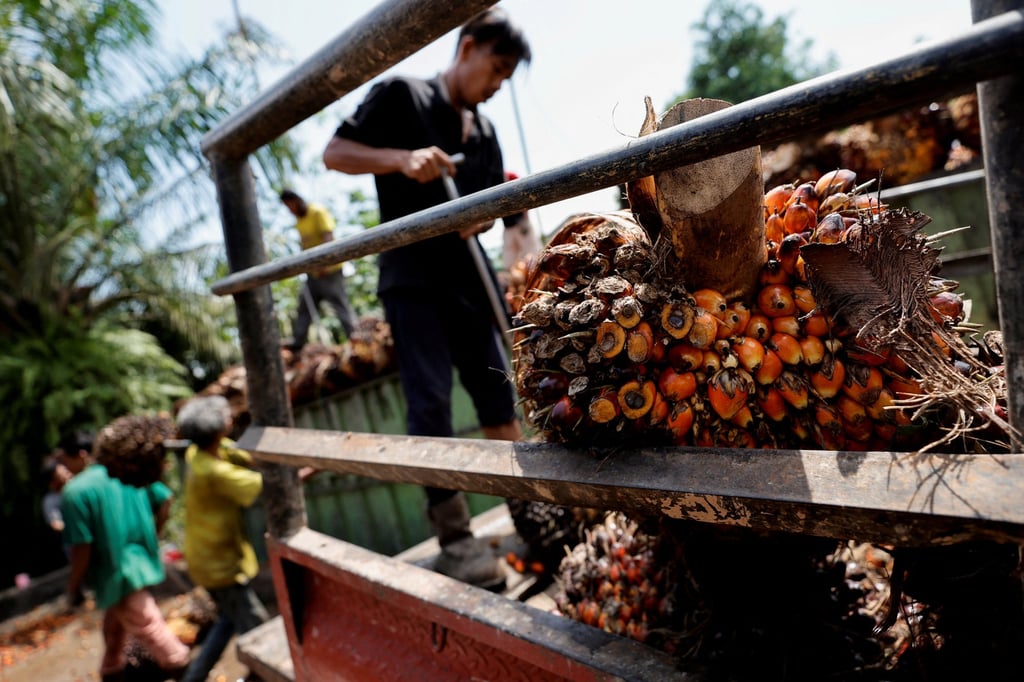
“We agreed to strengthen cooperation through the Council of Palm Oil Producing Countries (CPOPC) to increase the palm oil market and fight palm oil discrimination,” Widodo said on Monday, during a joint press conference at the presidential palace in Bogor, an hour’s drive from the capital Jakarta, as Anwar capped his two-day visit.
The EU last month said it planned to phase out the import of unsustainable palm oil-based fuels by 2030 due to its reputation as a driver of deforestation. Malaysia and Indonesia have filed complaints at the World Trade Organization, viewing the decision as motivated to aid European oil manufacturers.
In 2021, Indonesia produced 46 million tons of crude palm oil, making it the world’s largest palm-oil producer, with Malaysia behind with around 18 million tons. In the same year, the EU imported US$6.4 billion worth of palm oil products, mostly used for biofuels, three-quarters of it from the two Southeast Asian nations.
Explaining its stance, the European Commission in December said: “When the new rules enter into force, all relevant companies will have to conduct strict due diligence if they place on the EU market, or export from it: palm oil, cattle, soy, coffee, cocoa, timber and rubber as well as derived products.