
As I see it | ‘Slanted-eye’ models: why do brands like Mercedes, Three Squirrels and Dior alienate Chinese customers if they want their money?
- Put aside arguments about aesthetics – Chinese consumers have shown time and again they don’t appreciate these stereotypes. So why anger your target audience?
- For a change, how about using models with large eyes, double eyelids, and sunny dispositions? If not to sell more products, at least to stem the anger
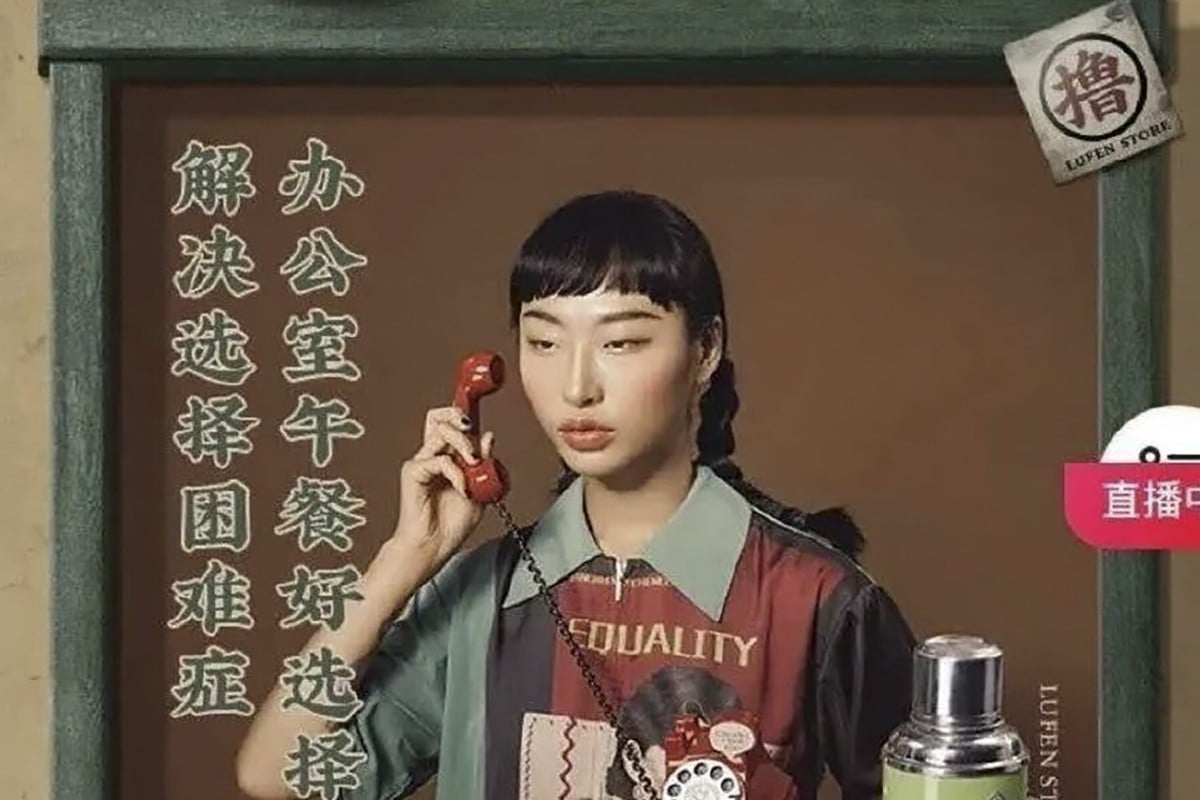
Chinese netizens and consumers have shown time and again that they have little appreciation for slanted-eye models in advertisements. So why anger them repeatedly by giving them what they would rather not see?
Last week, Mercedes-Benz deleted a video it had published on Weibo on Christmas Day featuring a model with slanted eyes, after facing a barrage of criticism from Chinese netizens arguing the images were “ugly” and “offensive”.
China’s nationalistic tabloid Global Times said the image of a Chinese person with slanted eyes and braids was a Western stereotype of the Chinese from the 19th century, and was “based on the Western sense of ideological superiority”.
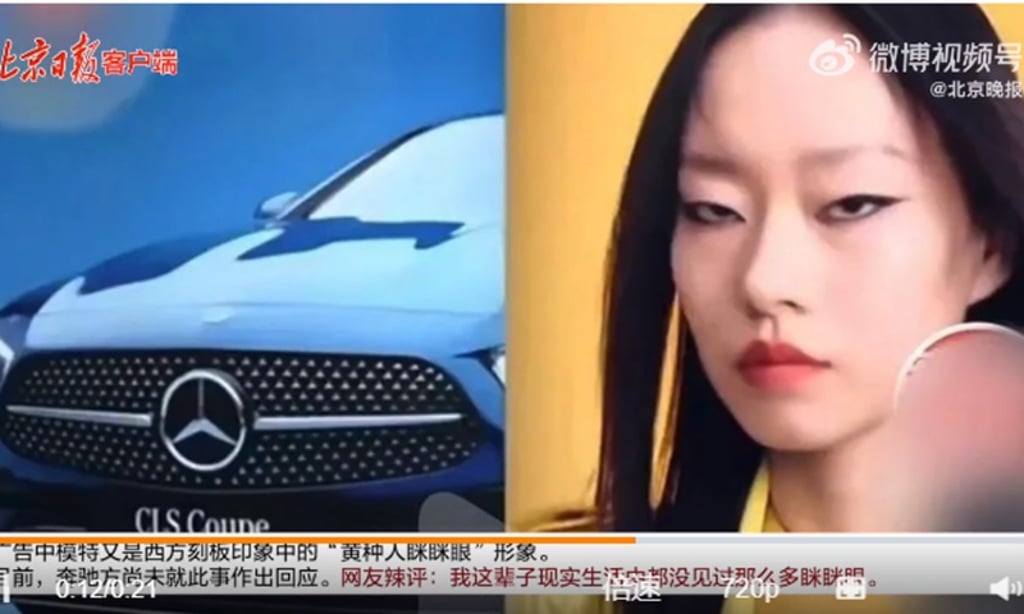
Countless Chinese said they had never seen as many Chinese with slanted eyes in real life as they had on advertisements, adding that the overall portrayal left an impression of “vileness” and “evilness”. Others accused the advertisement of being a “blatant provocation”.