South Korea’s ‘pali-pali’ spirit keeps killing its workers
Nine of the 14 people killed in Friday’s factory fire in Daejeon died in a room that did not officially exist

The warning signs were impossible to miss. Oil vapour so thick it coated the lenses of workers’ glasses with a greasy film. Grease caking the ceilings, the pipes, the machinery. Repeated pleas for ventilation improvements, met with silence.
Friday’s fire killed 14 people. Nine of them died in a single room that should not have existed.
That room – an illegally constructed rest area built by splitting a single-storey space into two levels – appeared on no official blueprints. Its one small side window offered no escape from the toxic gases that filled it.
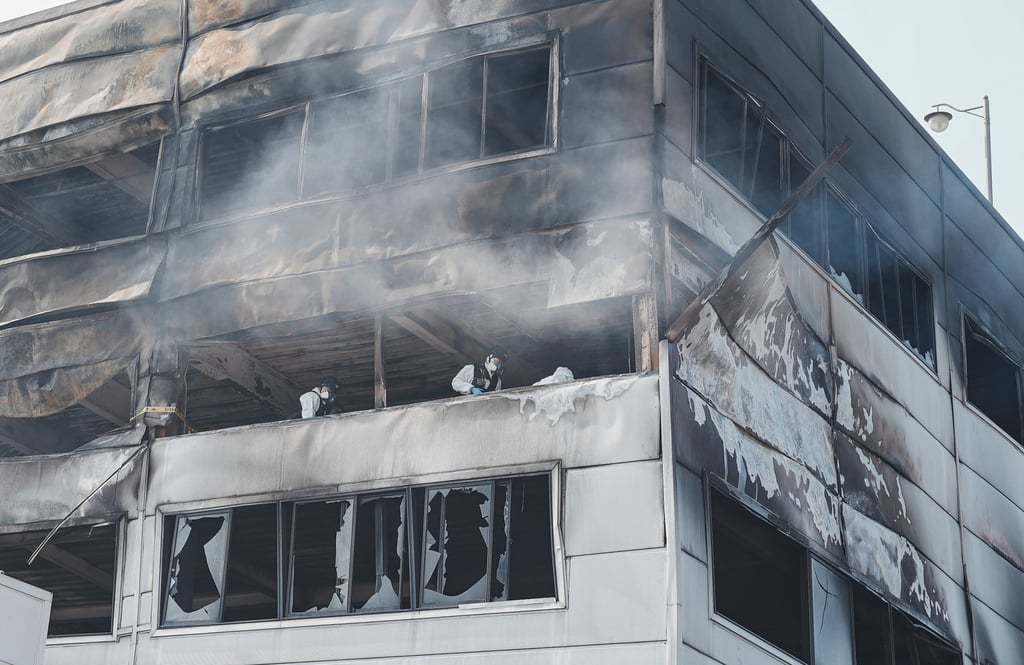
It was a death trap hiding in plain sight: the product of makeshift expansions carried out in 2010, 2011 and 2014 that authorities never properly identified or addressed, investigators and safety experts told This Week in Asia.