China is to blame for South Korea’s air pollution. Really?
- South Korea is one of the world’s most polluted countries and its killer dust claims thousands of lives a year
- But rather than blame diesel cars and coal-powered plants, it has become trendy to look abroad for a bogeyman

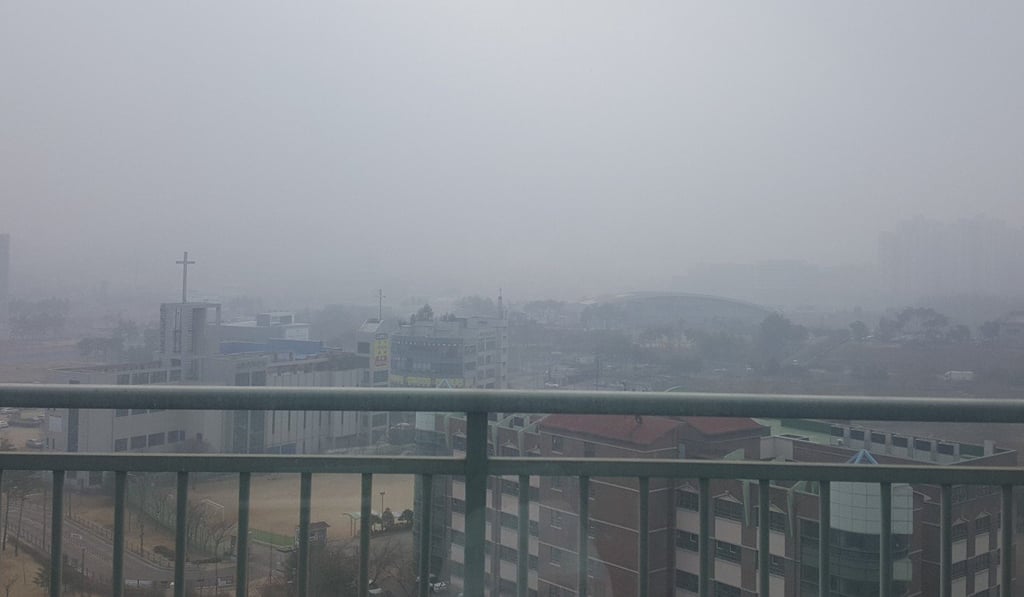
To the untrained eye, it seems like a foggy day in Seoul. The air is thick enough to taste and the visibility is just metres. Out of the haze emerge businessmen hurrying to work, women heading to the shops, mothers and children on the school run. Even in this fashion conscious city, they are all wearing the same thing: surgical style masks, as if scared to show their faces.
On the streets, fear is indeed in the air, but this is no fog. It is the same killer dust that has helped make South Korea one of the world’s most polluted countries and has caused up to 18,000 deaths in just one year, according to the World Health Organisation.
South Korea has struggled with pollution for years, but things seem to be getting worse. In 1990, the country had the seventh highest levels of particulate matter (PM) among the OECD countries – it is now second only to Turkey. And as recently as the first week of March this year, levels of PM2.5 – the ultra-fine airborne particles that can lodge deep in the lungs and have been linked to heath problems including cancer – were hitting records.
Frustrations are rising. A 2018 study by the Ministry of Environment found 97 per cent of Korean adults felt physical or psychological pain due to dust. Sixty per cent thought the problem was “serious” while another 30 per cent thought it was “extremely serious”.
“I always bring a mask with me before heading off to work,” said Park Jae-hyun, 33, who works an hour north from Seoul at his own computer design start-up. “I think the government should provide us with masks since this is a national emergency.”
“I don’t go outside any more, if I can,” added Baek Myung-eh, 32, an office receptionist. “I always check the PM levels constantly, and I can almost feel through my skin that the problem is getting worse.”