Chinese in the Russian Far East: a geopolitical time bomb?
Joint investment between Moscow and Beijing may be a win-win on paper but, as experience in the Russian Far East shows, it can also fuel resentment regarding China’s presence

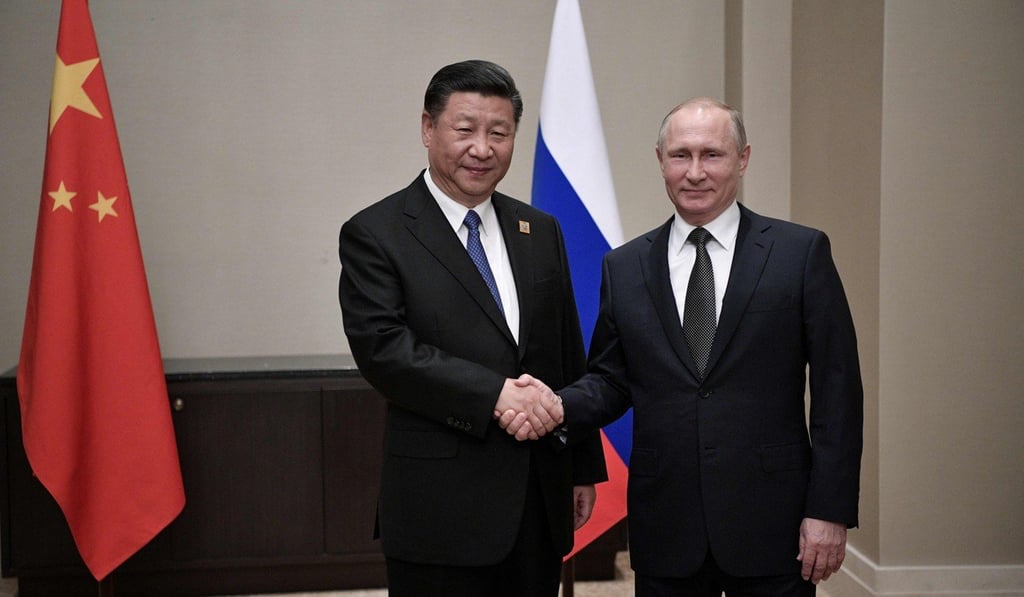
Sino-Russian relations are “at their best time in history”, Chinese President Xi Jinping told Russian media attending the summit – words that were backed up with the announcement of a US$10 billion fund for cross-border infrastructure projects.
But for all the fanfare surrounding the fund, Chinese investment in the region is helping to fuel tension, raising fears of China’s growing presence in the Russian Far East. A side effect of Beijing’s investment – an influx of Chinese migrants – is often perceived by locals as an expression of China’s de facto territorial expansion. Some Russian political groups and media outlets have tapped into this anxiety and deliberately sensationalised it. An apocalyptic film China – a Deadly Friend (in the series “Russia Deceived”) became an instant internet hit after its release in 2015. In the film, we are told China is preparing to invade the RFE in its quest for global dominance and that Chinese tanks could reach the centre of the city of Khabarovsk within 30 minutes. Just 30km from the Chinese border, Khabarovsk is the second largest city in the RFE after Vladivostok and the region’s administrative centre.
The fear-mongering notwithstanding, the scale of migration is actually not that large. According to Russia’s census of 2010, the number of Chinese residing in the country was just 29,000, down from 35,000 in 2002 – no more than 0.5 per cent of the total population of the RFE.
Other estimates, however, put the number of Chinese in Russia at 300,000 to 500,000.
But the issue of Chinese presence in the RFE touches a raw nerve in Russia, largely for two reasons. First, Russians view it in the context of the enormous and growing economic and population incongruence with China and second, the three-decades-long Sino-Soviet confrontation, including border clashes in the late 1960s.