China’s once-booming clothing markets face a reckoning amid post-pandemic e-commerce shift as sales dry up
- Before the pandemic, Shanghai’s Qipu Road Clothing Market saw 100,000 daily visitors, but the hallways are now quiet and many shops have closed
- Merchants are protesting high rents and grappling with new trends, such as live-streaming e-commerce, but worry about competing with wholesale clients

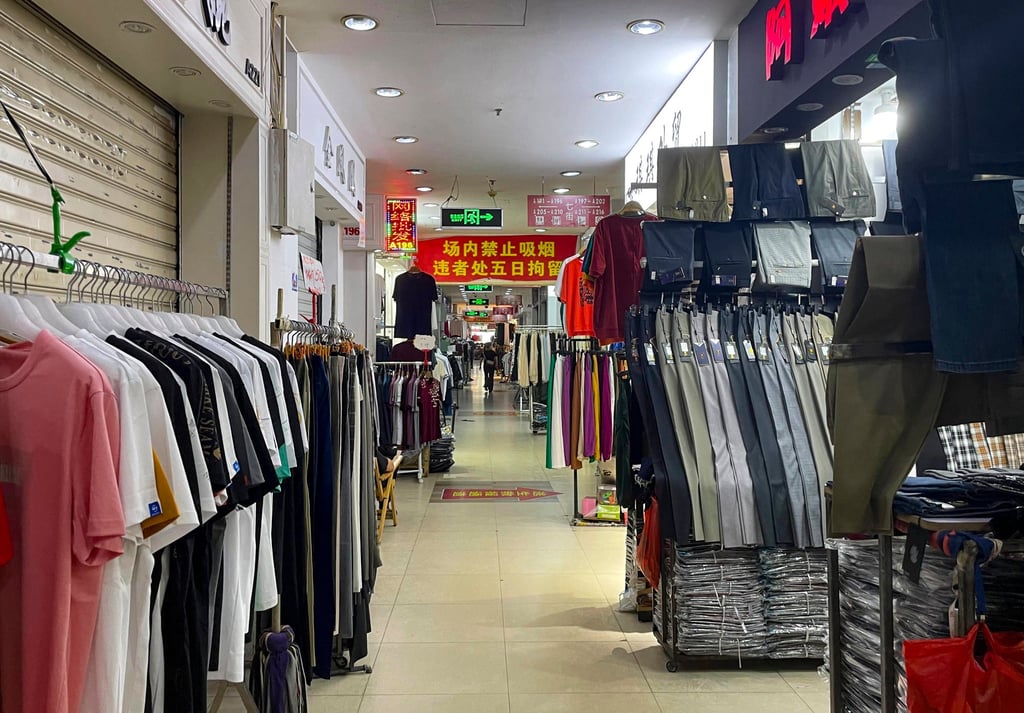
Once a mecca for shoppers seeking fashion bargains, Shanghai’s Qipu Road Clothing Market felt like a ghost town during a recent visit, with many shops closed and few potential buyers roaming the halls.
The eerie quietness marked a sharp contrast to the days before the pandemic, when the market boasted daily traffic of 100,000 people. Since the rigid 60-day lockdown in the city earlier this year to fight the spread of the Omicron Covid-19 variant, Qipu shop owners have become worried that the market’s halcyon days are behind it.
Online channels, once seen as a remedy to declining offline sales, have also been waning amid weakening consumer demand as the world’s second largest economy slows.
One Qipu shop owner surnamed Li said he moved to Shanghai from the northern port city of Tianjin a few years ago, when the market was considered the gravitational centre for Chinese fashion retail. Now that is no longer the case, he said.
“I’ve never seen the market like this,” said Li, who is in his 50s. “In the past, even on weekdays, the market was full of people.”
“When your offline business is very good and the online store doesn’t make much money, it’s very easy to give up the latter,” Li said. Now he thinks it would be too late to open another online store or to start a live-streaming e-commerce business because competition has grown fierce and sales growth has plateaued.