Developing Accessible Learning Tools in Hong Kong for Dyslexia in Chinese
Dr Cecilia CHAN Yuet-hung’s new platform is a rare and valuable tool for helping children who face difficulties reading Chinese characters

[Sponsored Article]
When the Department of Health’s Child Assessment Service announced in 2018 that up to 12.6 per cent of children in Hong Kong suffer from dyslexia, it came as no surprise to Dr Cecilia Chan Yuet-hung, a linguistics expert who last year developed a multimedia platform to help dyslexic junior primary school students in the city.
Chan is Associate Professor and Associate Head at CityU’s Department of Linguistics and Translation. Her credentials include a doctorate from the University of Essex, serving as a specialist for the Hong Kong Council for Accreditation of Academic and Vocational Qualifications, and more than 30 years teaching experience at CityU.
Previous research on Chinese dyslexia found that various types of deficits are associated with this specific language disorder. The ability to recognise and decode Chinese characters is crucial for reading in Chinese. Dyslexia in Chinese characters brings a new dimension to the problem as opposed to foreign languages that use an alphabet, for example.
Combatting a Lack of Dyslexic Resources
“For English, it is the order of the letter or the shape of the letter that may make it hard for those suffering from dyslexia,” explains Chan. “The difficulty with Chinese characters is in recognition and decoding. A Chinese character consists of a form or shape, meaning, and pronunciation. So, all these elements are very important for recognising a Chinese character.”

Despite her long career, it was only a few years ago that Chan started developing her tool to help with dyslexia in Chinese. “Syntactic structures have received little attention, that is why I started working on it,” she says. “But the more I worked on it, the more I found there were no practical resources available.”
The range in dyslexic severity is wide in Hong Kong. The Department of Health puts the figures at 70 per cent of those afflicted as mild, 20 per cent moderate and 10 per cent severe. Chan’s digital platform is designed to take into account the characteristics of Chinese characters and the difficulty dyslexic children have in recognising them, and to provide tailor-made exercises that help with recognising and decoding the written language.
Radical Methods
There are two major parts to Chan’s platform: focusing on pronunciation, and meaning.
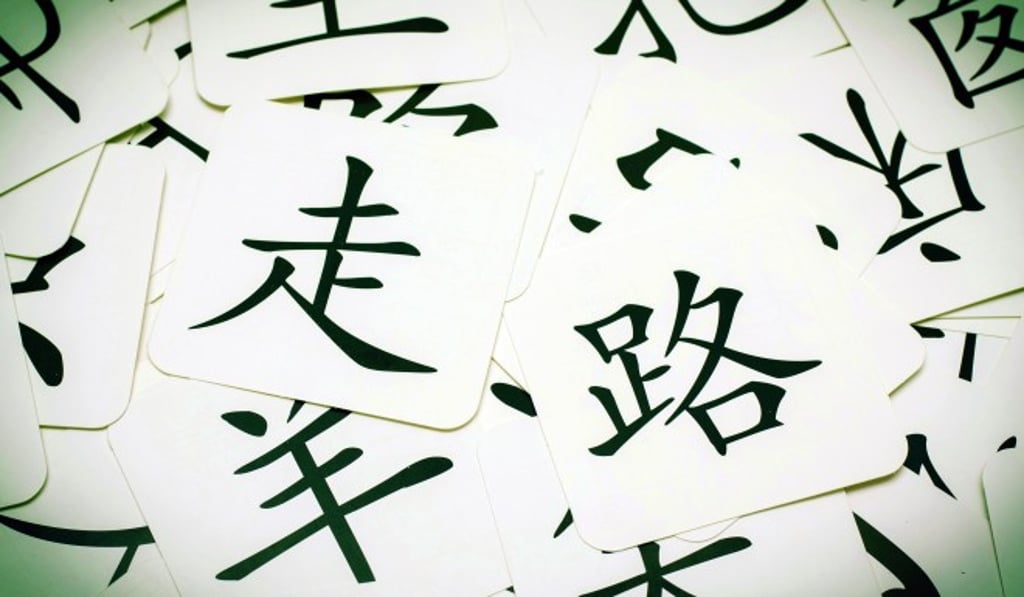
The second part of her online instrument deals with the semantic component, indicating the “meaning” of the word. “This component in traditional terminology, we call ‘radicals’. Nowadays, I don’t think students learn radicals. Some schools don’t introduce them. That is why we introduce them in our platform so that students can become aware of the semantic component of the characters.”
Chan adds, “This is also to help with their orthographic processing as well. When they recognise the form of a radical, they can associate the meaning of this character with this component.”
Motivating Children Brings Progress
Chan and her team put together a user guide for parents, teachers, and coordinators of NGOs to help navigate her learning platform which launched in 2020. “I invited some schools to participate and get some students to do the pilot. I gave the primary schools and the NGOs a questionnaire for feedback.”
The associate professor was overwhelmed by the positive feedback. Parents acknowledged that her multimedia platform finally provided a way to make learning for their children an interesting exercise.
“Because this multimedia resource makes use of different senses–the visual, the audio, etc–it helps them enhance their interest and motivation. Practical training or reading from paper can help as well, but it is limited. When it comes to online, there are more multimedia resources. If we can properly motivate children, then we can definitely see progress,” Chan explains.
As with other learning difficulties, dyslexia is often a challenge that is difficult to face for parents and the children alike. Providing resources that make it fun and interactive is a helpful solution. Another game, designed for kindergarteners by the Heep Hong Society, features a small number of characters and is presented with bright colours for greater appeal.
Her multimedia platform is still new, and Chan hopes to invite more NGOs and schools to experience the programme and increase the number of users. Eventually, she aims to expand the platform to cover nondyslexic children in junior primary school and, in the next stage, students in senior primary school.
The platform is not perfect, Chan admits, adding that it will require ongoing refinement. As a result, Chan welcomes all the help she can get. “I know nothing about programming. Fortunately, I have very bright students to help me.”
“There should be a lot more resources available, but I think this is something I really want to produce. If the students find it useful and it motivates their learning, it will all be worth it.”