Advertisement

Opinion | Hong Kong must fix Tenants Purchase Scheme’s flaws before any relaunch
The public housing sale scheme for tenants was a bold experiment that delivered partial success but left thorny problems
Reading Time:3 minutes
Why you can trust SCMP

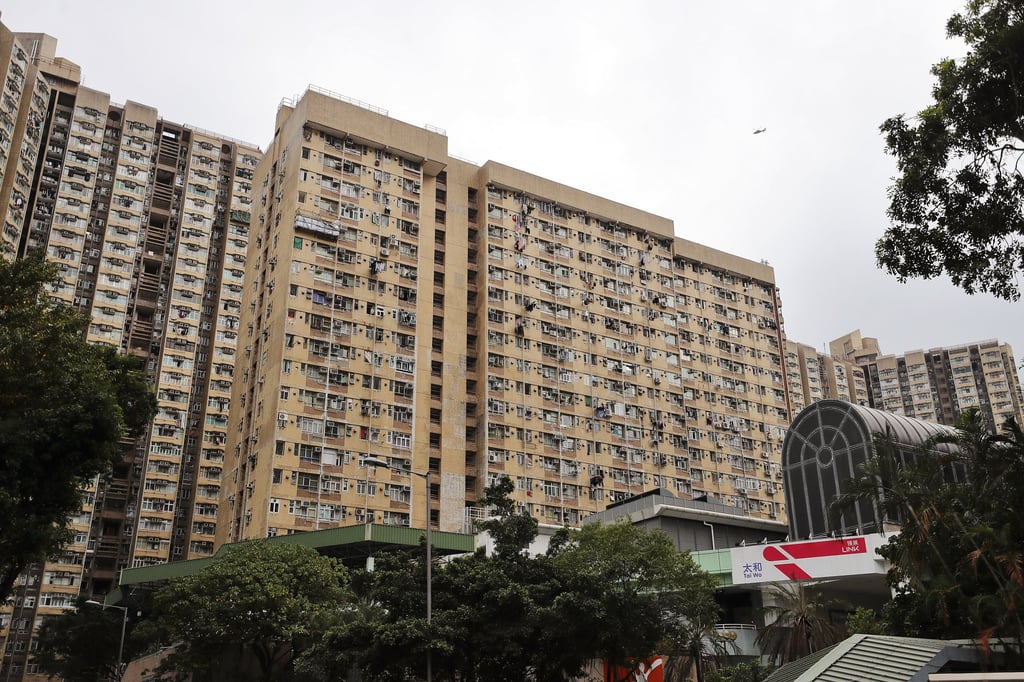
When Hong Kong’s Housing Authority launched the Tenants Purchase Scheme (TPS) in 1998, it embodied the city’s aspiration of home ownership for all. Then the chief executive, Tung Chee-hwa, envisioned public housing tenants buying their flats at a discount, transforming renters into homeowners. That year, the first batch of 25,000 flats was rolled out.
In total, 39 estates were included, offering 184,036 flats. The latest Housing Authority data shows that 154,743 of these were sold to tenants. On paper, this looks impressive. In reality, the scheme quickly ran into headwinds, was suspended in 2002 and effectively terminated in 2005. The reasons for its failure remain instructive today, as policymakers debate whether to revive the programme.
The decision to halt TPS was driven by multiple factors. Firstly, there were economic and fiscal pressures. The 1997 Asian financial crisis and 2000 dotcom crash depressed both property prices and tenants’ buying power. And many public rental tenants already had limited ability to take on a mortgage, being either older, reliant on social welfare or on low incomes.
Advertisement
There were also those, including younger tenants, who preferred the newer subsidised flats offered under the Home Ownership Scheme and the Green Form Subsidised Home Ownership Scheme. This was especially as the unsold stock of flats began to age and require costly repairs. Crucially, TPS represented a policy overlap, blurring the lines between subsidised housing schemes and creating confusion about its role.
Though the scheme was discontinued, those originally eligible can still claim the discount. Yet interest in the remaining housing stock remains low. A Housing Authority survey last year found only 12 per cent would consider buying their flats, against around 54 per cent not interested. Over the past decade, those surveyed who expressed an interest never went above 25 per cent.
Advertisement
The scheme’s ideals collided with economic realities, demographic shifts and policy incoherence. The broader vision of widespread home ownership was never realised.
Advertisement
Select Voice
Choose your listening speed
Get through articles 2x faster
1.25x
250 WPM
Slow
Average
Fast
1.25x