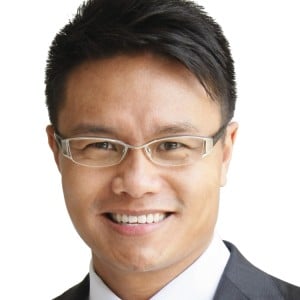
Ken Chu (LLD) is the chairman and CEO of Mission Hills Group with businesses in hospitality, leisure, entertainment, sports, wellness and education in China.
The Nobel Prize may not seem very relevant to many, but we can certainly draw lessons from its winners. Earlier this year, Peter Howitt – an honorary professor and fellow alumnus of Canada’s Western University – was awarded the Nobel Prize in Economic Sciences with two other professors for work on innovation-driven economic growth.
Howitt’s work helped formalise the concept of creative destruction, which explains how economies evolve through cycles of renewal, where new companies and technologies replace outdated ones, driving long-term prosperity. His foundational scholarly work on macroeconomics, monetary dynamics and endogenous growth underscores how ideas can transcend borders and reshape economies. This insight matters for Hong Kong today.
Our city has long succeeded by leveraging trade, finance and services rooted in stability and connectivity. While these strengths remain important, global economic conditions are shifting, from supply chain realignments to regional competition, resulting in the old formula yielding diminishing returns. Howitt’s work calls for a different mindset: one that embraces disruption, supports renewal and primes the economy to evolve.
This kind of transformation is already under way across the Greater Bay Area. In the 2025 Global Innovation Index by the World Intellectual Property Organisation (WIPO), Shenzhen-Hong Kong-Guangzhou was ranked the top innovation cluster, overtaking traditional powerhouses like Tokyo-Yokohama and San Jose-San Francisco.
What does this reflect in practice? Between Hong Kong’s deep capital markets and regulatory strength, and mainland cities’ manufacturing scale and tech investment, the region is building a tightly integrated ecosystem for innovation. According to WIPO, the cluster’s rise to the top was driven not only by patent filings and scientific publications, but also by the newly included metric of venture capital activity, which is rapidly expanding. This suggests ideas are not just being generated but also funded, scaled up and commercialised.
At the same time, sectors across the Greater Bay Area are undergoing structural upgrading. Cities such as Guangzhou have ramped up investment in advanced manufacturing, semiconductors, new-energy technology and smart equipment production, signalling a shift from traditional labour-intensive industries towards highly skilled, high-value production.
01:52
China’s Guangdong Xiaopeng tries to dispel rumours that its robot is human