Advertisement
ExplainerWhat is the Good Friday Agreement that helped bring peace to Northern Ireland?
- Also called the Belfast Agreement, the pact was signed on April 10, 1998. It brought an end to more than 30 years of conflict over British rule
- The agreement created an invisible border between the island’s north and south, which has been sorely tested since Brexit as Ireland remains in the EU
3-MIN READ3-MIN

Northern Ireland this week marks the 25th anniversary of peace accords which have helped transform the UK province.
The 1998 Good Friday Agreement brought an end to more than 30 years of conflict over British rule.
The landmark agreement, also called the Belfast Agreement, was signed on April 10, 1998, between the then-prime ministers of Britain and Ireland, Tony Blair and Bertie Ahern.
Advertisement
Eight political parties or groupings also signed the document, stating in the text that it was a “truly historic opportunity for a new beginning”.
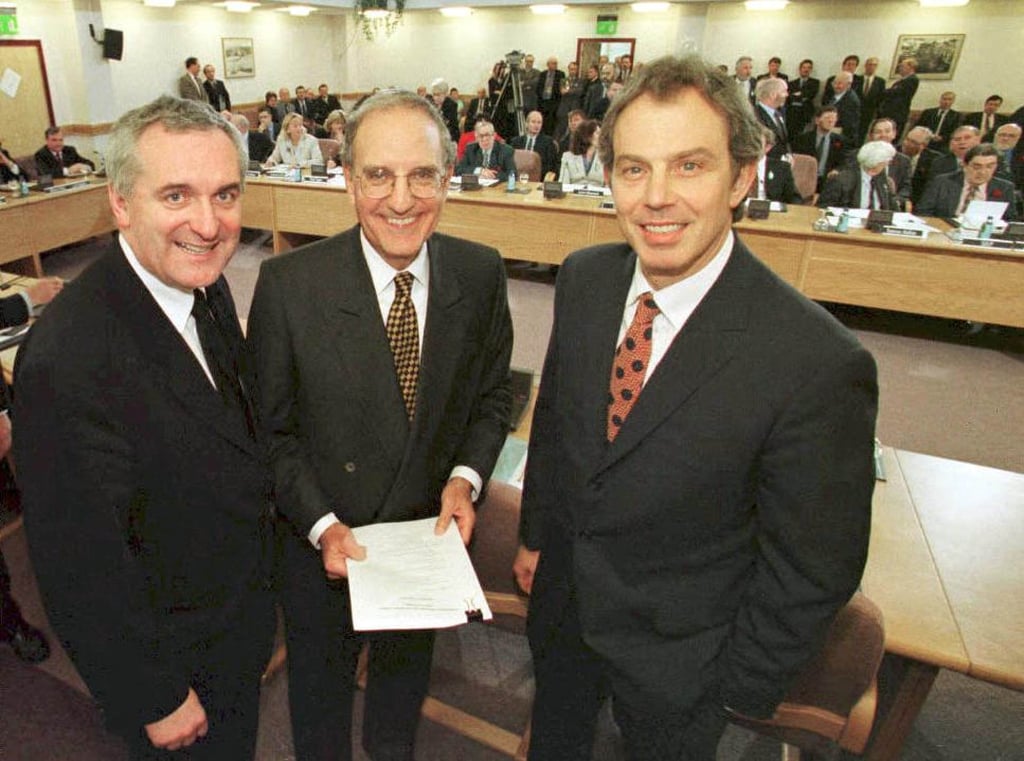
US President Bill Clinton sent Senator George Mitchell to chair the talks.
Advertisement
Advertisement
Select Voice
Select Speed
1.00x