Human interaction causes alarming stress in narwhals, the ‘unicorns of the sea’
Fearful narwhals use 97 per cent of their oxygen supply and their heart rate plummets during ‘escape dives’

Narwhals, nicknamed the “unicorns of the sea” because of their signature head tusks, exhibit an “alarming” response to human-caused stress that may lead to brain damage, researchers said Thursday.
When fearful, narwhals swim away fast and deep, allowing their heart rates to drop from 60 beats per minute to three or four.
During such escape dives, narwhals needed 97 per cent their oxygen supply and often exceeded their aerobic dive limit, or “depletion of oxygen stores in the muscles, lungs, and blood, followed by anaerobic metabolism,” said the study in the journal Science.
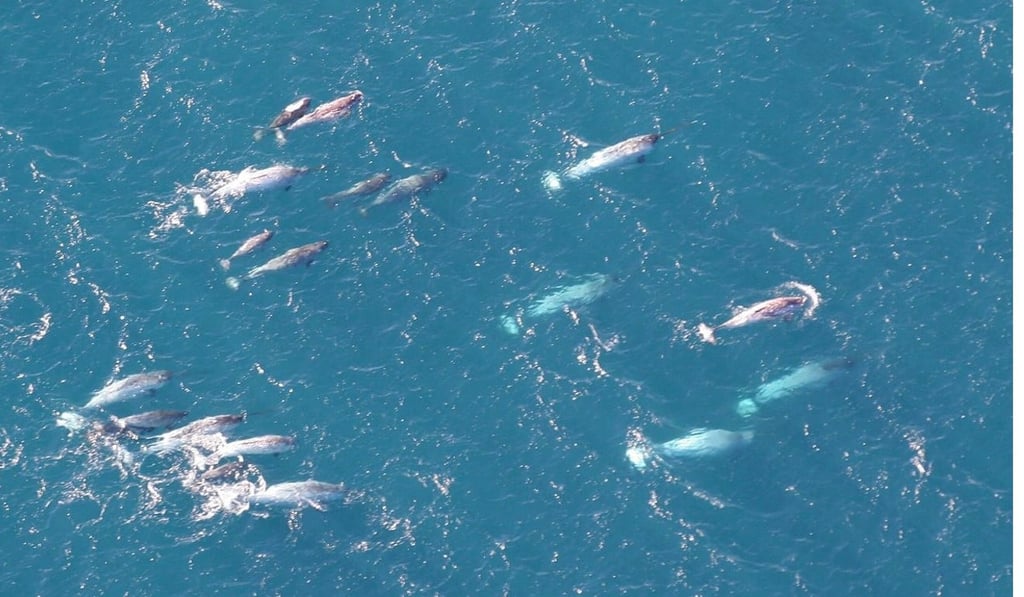
This combination of freezing while and entering a “flight or fight” response could make it hard for narwhals to get enough oxygen to the brain and other critical organs, researchers said.
The study has “cautionary” implications for narwhals and other whales, dolphins and marine life affected by human activities like shipping, seismic exploration and drilling for oil, said lead author lead author Terrie Williams, a professor of ecology and evolutionary biology at the University of California Santa Cruz.
“The biology of these animals makes them especially vulnerable to disturbance,” she said.