Diamond hunting on the Atlantic Ocean floor with giant vacuum-like hoses
Last year, mining companies extracted US$600 million worth of diamonds off the Namibian coast as the output of existing onshore mines declines

Deep beneath a frigid stretch of the Atlantic Ocean, some of the world’s most valuable diamonds are scattered like lost change. The discovery of such gems has sparked a revolution in one of the world’s most storied industries, sending mining companies on a race for precious stones buried just under the seafloor.
For more than a century, open-pit diamond mines have been some of the most valuable real estate on Earth, with swaths of southern Africa producing billions of dollars of wealth. But those mines are gradually being exhausted. Experts predict that the output of existing onshore mines will decline by around 2 per cent annually in coming years. By 2050, production might cease.
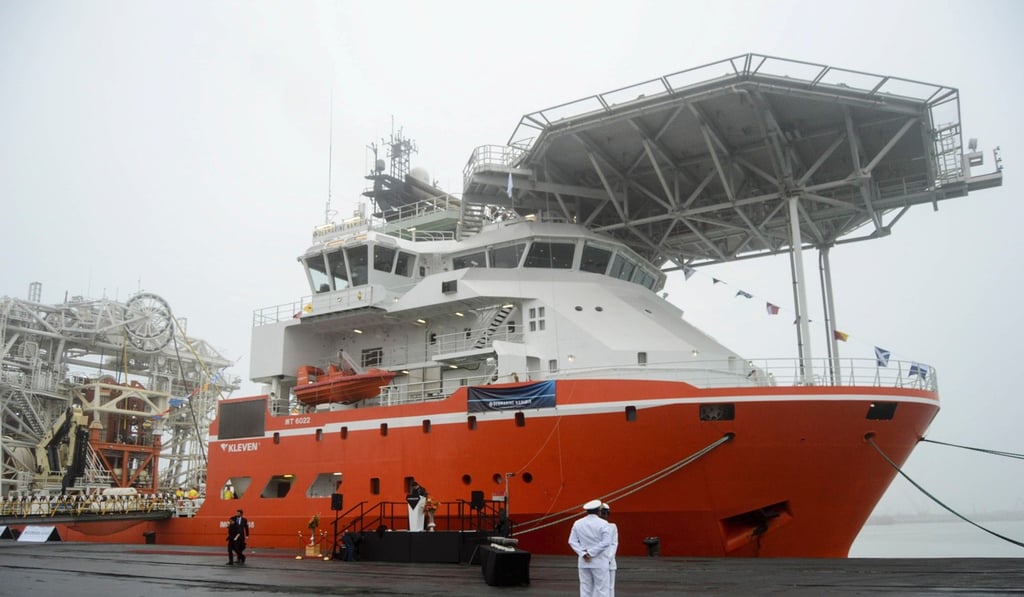
Now, some of the first “floating mines” could offer hope for the world’s most mythologised gemstone, and extend a lifeline to countries like Namibia whose economies depend on diamonds. Last year, mining companies extracted US$600 million worth of diamonds off the Namibian coast, sucking them up in giant vacuum-like hoses.
“As [Namibia’s] land-based mines enter their twilight years, it’s very important for us and for Namibia that we have long-term mining prospects,” said Bruce Cleaver, the chief executive of De Beers.
But as companies weigh the prospect of more offshore operations, environmentalists have raised concerns about the damage that could be inflicted on the seafloor.