Most Hong Kong parents delay exposing children to allergenic foods – which may be a wrong strategy, study finds
Experts say infants can build up their immunity if they are introduced earlier to such foods, rather than later or never at all

Most Hong Kong parents have misconceptions about food allergies with more than 90 per cent of them preferring to delay exposing their children to allergenic foods such as peanuts and seafood, according to a latest study.
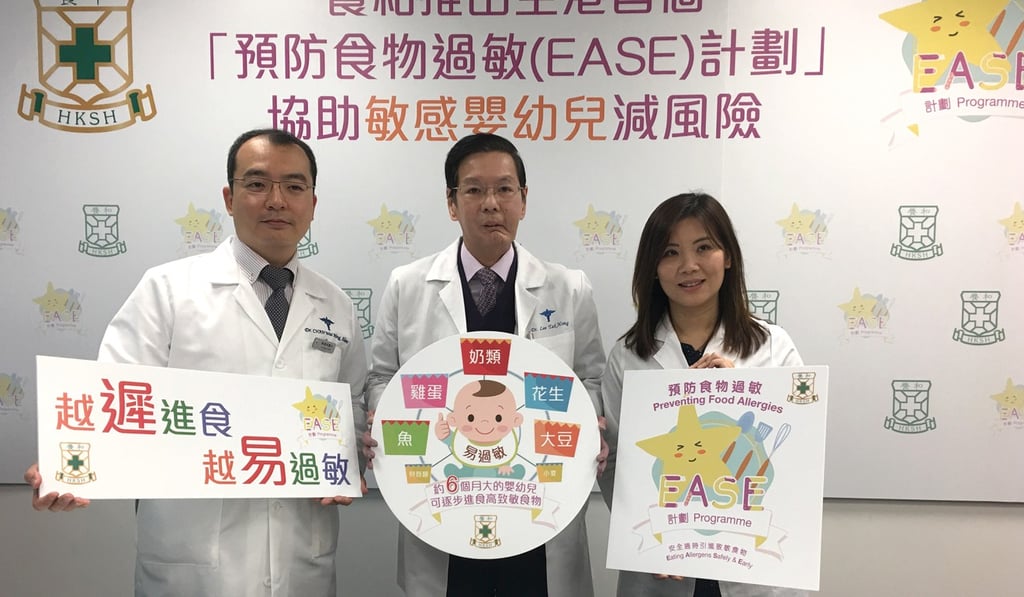
Announcing their findings last week, experts from the Hong Kong Sanatorium and Hospital said infants should be fed as many different types of food as possible from six months of age to build up their immune systems. But they advised parents to first consult a doctor or dietitian, and to be aware of their own family history of allergies.
The study found that half of newborn babies in the city are at risk of suffering from an allergy caused by a hypersensitive immune system, a trend that is becoming increasingly widespread worldwide. In most cases, at least one parent also has the condition.
According to another report in 2012, about 5 per cent of Hong Kong children suffer from one or more types of food allergy. The most common foods triggering reactions were found to be shellfish, eggs, cow’s milk and peanuts.