Mental well-being among Hong Kong university students has declined since 2017, a new study has found
- Students’ ‘social well-being’ is down by some 11 per cent on researchers’ scale
- The metric takes into account young people’s sense of belonging in society at large

The mental health and well-being of university students in Hong Kong has deteriorated over the past three years, according to new research, with experts emphasising the need for tertiary-level curricula to integrate elements of “positive education” – an approach that seeks to build character through social engagement.
The findings were the result of a cross-sectional survey and an accompanying longitudinal study that polled about 1,000 students – aged 18 to 24 – from five universities on their levels of happiness and life satisfaction between 2017 and 2020.
Most of the respondents were part of the Joint University Mental Wellness Project (JUMP), which organises conferences, mental wellness workshops, community projects and study tours in an effort to promote mental wellness.
The longitudinal study, which tracked 271 university students from 2017 through January of 2020, found the level of social well-being declined by 11 per cent, from a score of 3.5 to a score of 3.1 on a six-point scale.
The respondents were asked whether they agreed with statements such as “I think our society is an ideal society”, and “our society is gradually becoming an ideal society”.
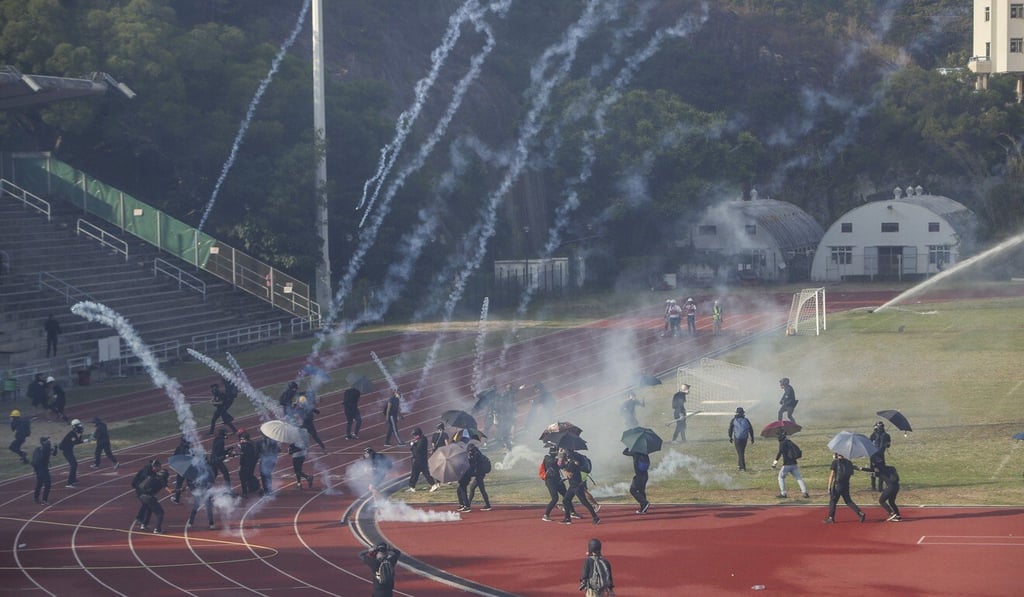
Dr Sylvia Kwok Lai Yuk-ching, an associate professor with the department of social and behavioural sciences at City University, said it was difficult to ascertain whether the decline was due to last year’s anti-government protests – a movement that saw substantial student participation – as no data was collected in the study to measure the correlation between declining well-being and the months of unrest.
“It is a significant decrease, but it is not really alarming,” said Kwok, who presented the findings in a Zoom conference call on Saturday.