Advertisement
Star US gene-editing scientist Zhang Feng pays rare visit to China’s top university
- The China-born MIT researcher, hailed as one of the most innovative life scientists in the world, talked about his work to a packed lecture hall
- Zhang’s achievements include his role in the development of CRISPR as well as new methods of delivering gene-based therapies for cancer and other illnesses
Reading Time:2 minutes
Why you can trust SCMP
14

Ling Xinin Ohio
Chinese-American star scientist Zhang Feng made a rare public appearance in China last week, speaking to a packed lecture hall and meeting enthusiastic admirers at Peking University.
Zhang, based at the Massachusetts Institute of Technology (MIT), won world renown as a pioneer of CRISPR, the gene-editing technique that lets scientists manipulate the genetic code of organisms and make precise changes to genomes.
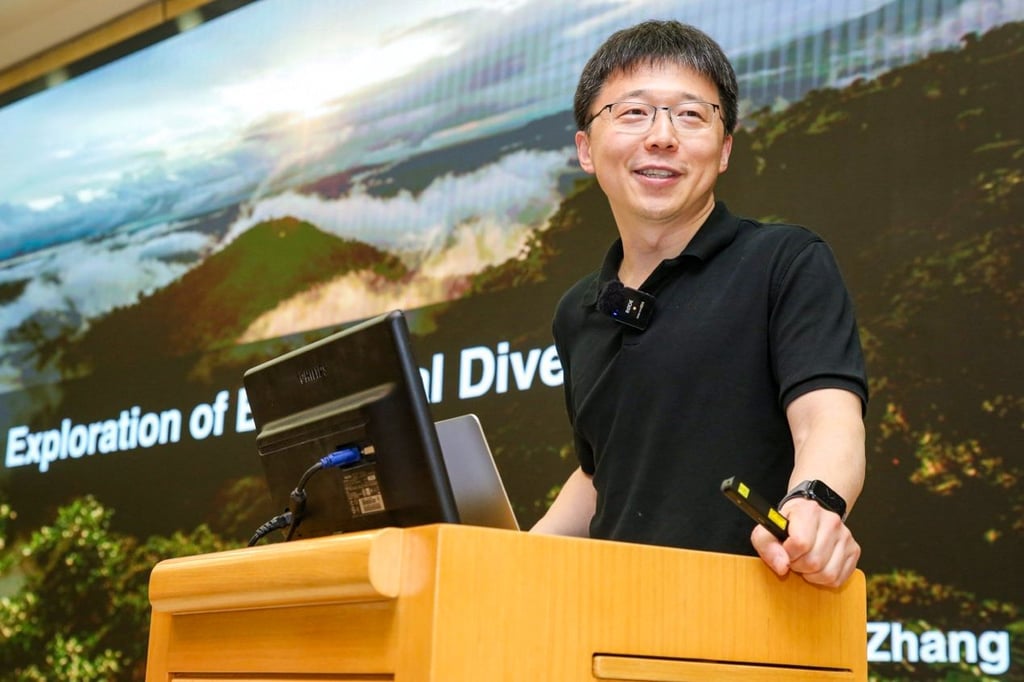
According to the Peking University website, the 42-year-old shared details of his latest research results, as well as personal stories of his own journey into biochemistry – an interest that began in seventh grade when he saw the film Jurassic Park.
Advertisement
Zhang, hailed as one of the most innovative life scientists in the world, talked about the gene-editing tools and delivery systems developed in his lab at MIT, during Wednesday’s lecture which was billed as an exploration of biological diversity.
He said the modular design of gene-based medicines offered new tools for treating genetic diseases, while the techniques to deliver these medications to their target sites in the body lagged behind.
Advertisement
Last year, Zhang’s lab reported a new method of injecting proteins into human cells, which shows “great potential” for cancer treatments and a range of biological therapies, he said.
Zhang and his team have also developed a delivery method for RNA-based gene therapies, which use components from within human cells to self-assemble into virus-like particles and deliver functional mRNAs to mammalian cells.
Advertisement
Select Voice
Choose your listening speed
Get through articles 2x faster
1.25x
250 WPM
Slow
Average
Fast
1.25x