Chinese scientists in pollution-busting 1-in-80 year breakthrough
- The researchers say they have developed the most stable, effective microporous silicate yet, with implications for industrial emissions
- The key to ZEO-3 stability is its 3-dimensional structure of large pores, which has eluded this field of research for eight decades

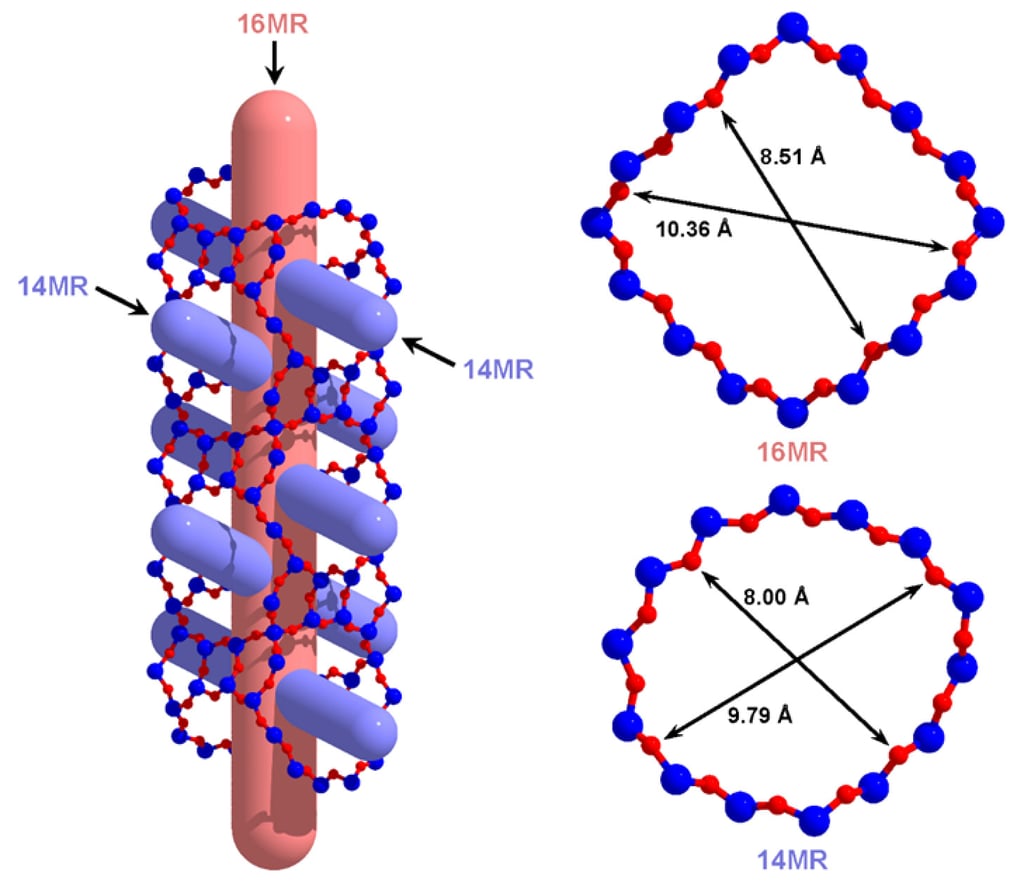
The researchers, from the Instituto de Ciencia de Materiales de Madrid (ICMM) and Jilin University’s State Key Laboratory of Inorganic Synthesis and Preparative Chemistry, said they have developed the most porous and stable zeolite so far, called ZEO-3.
Li Jian, lead author of the paper published in January by the peer-reviewed journal Science, said the team had achieved something that had eluded scientists in the field of zeolites, which are used in oil refining and fuel cells, as well as biomedicine.
“In the more than 80-year history of human synthesised zeolites, a three-dimensionally stable, ultra-large-porous silicate zeolite has always been the goal of all researchers in this field,” Li said, in a statement from Jilin University.
“This topic remains a great challenge, with few breakthroughs in the past few decades.”