Was this ancient creature the backbone of early vertebrates?
- Researchers in China have taken a fresh look at fossils found in Yunnan and see signs of a skeleton
- The extinct animals had cartilage structures that were previously only associated with vertebrates

It was soft, wormlike, lived more than 500 million years ago – and now scientists say the extinct animal was an ancient ancestor of modern vertebrates.
Scientists have long been searching for fossils of distant vertebrate ancestors to explain the evolution of invertebrates to vertebrates, including fish and mammals.
Researchers from the Chinese Academy of Sciences and Nanjing University say new analysis of 127 fossils of yunnanozoans found at the Chengjiang Fossil Site in the southwestern province of Yunnan indicates that the animal bridged that gap.
“These analyses support that yunnanozoans are the earliest branching stem vertebrates,” the team wrote in an article published in the peer-reviewed journal Science on Friday.
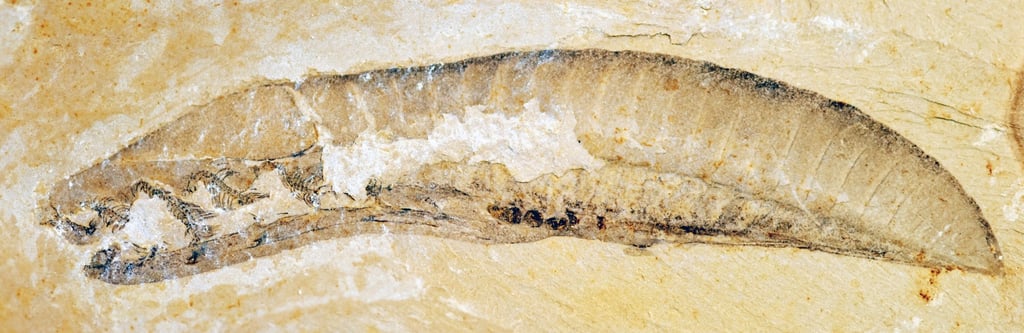
The fossils from the early Cambrian period 518 million years ago showed that the fishlike creatures had an unmistakable vertebrate trait – a pharyngeal skeleton made of cellular cartilage, a key feature that likely laid the foundation for the development of the jaw and skull.
The skeleton comprised seven pairs of pharyngeal arches, structures in developing embryos that give rise to bone, nerves and muscles of the face and neck.