Will China follow through on green pledge with Antarctica protections?
- Environmentalists hope Beijing will support largest conservation zone deal in history to protect Great Southern Ocean
- Discussions come weeks after Chinese president Xi Jinping committed to biodiversity leadership role at United Nations

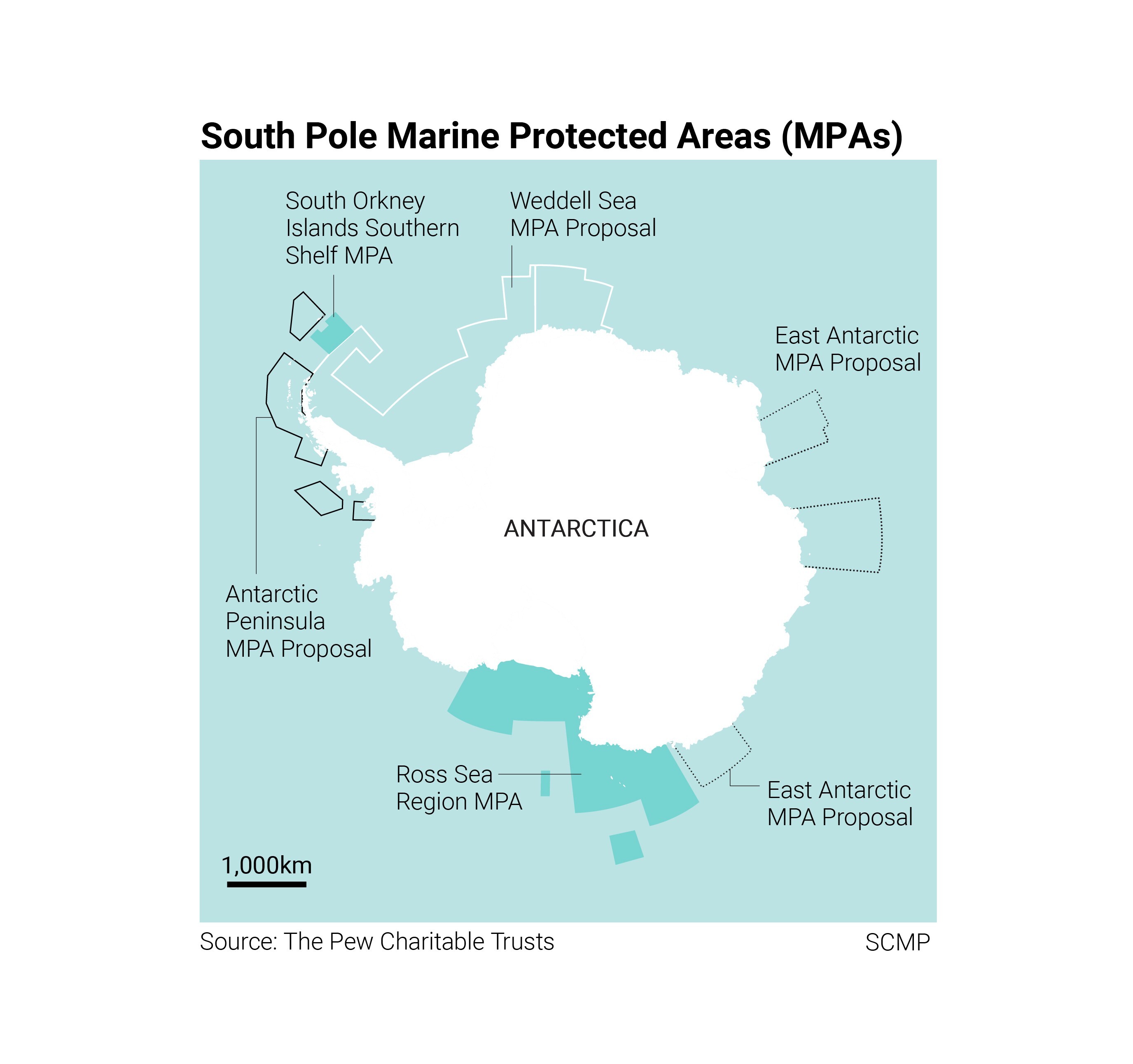
CCAMLR is part of the Antarctic treaty system which administers the conservation of the region and has 25 members including the US, Britain, China and Russia. The proposed protected areas – East Antarctic, Weddell Sea and Antarctic Peninsula – cover almost 4 million square kilometres of the Southern Ocean.
Xi told the UN summit his country would be carbon neutral by 2060, along with a promise to introduce more national legislation to preserve biodiversity, as China steps up to an environmental leadership role to fill the gap left by the Trump administration’s withdrawal of the US from international frameworks like the Paris Agreement, hailed as a historic climate change initiative.
“This is really the first opportunity for China to follow through on that leadership, and in particular to designate the East Antarctic marine protected area, which is the one that has been on the table the longest,” said Nicole Bransome, a marine ecologist working with the US non-governmental organisation Pew Charitable Trust.