China faces largest ecological deficit ever, WWF report finds
Carbon and other pollutants far exceed process capacity of country's ecosystems, jeopardising human health and a dozen species, report finds

China is experiencing its largest ecological deficit ever - caused by decades of high economic growth and rapid urbanisation - as total emissions of carbon and other pollutants far exceed the capacity of its ecosystems, a new study says.
The "China Ecological Footprint Report", released yesterday by the global conservation body the WWF, also warned that the country's soaring carbon emissions have not only contributed to an avalanche of environmental woes, but also pose grave threats to about a dozen endangered species.
The warnings came just a few days after this year's UN climate talks in Doha ended over the weekend with a disappointing, weak agreement that many believed was far less than what was needed to rein in global warming.
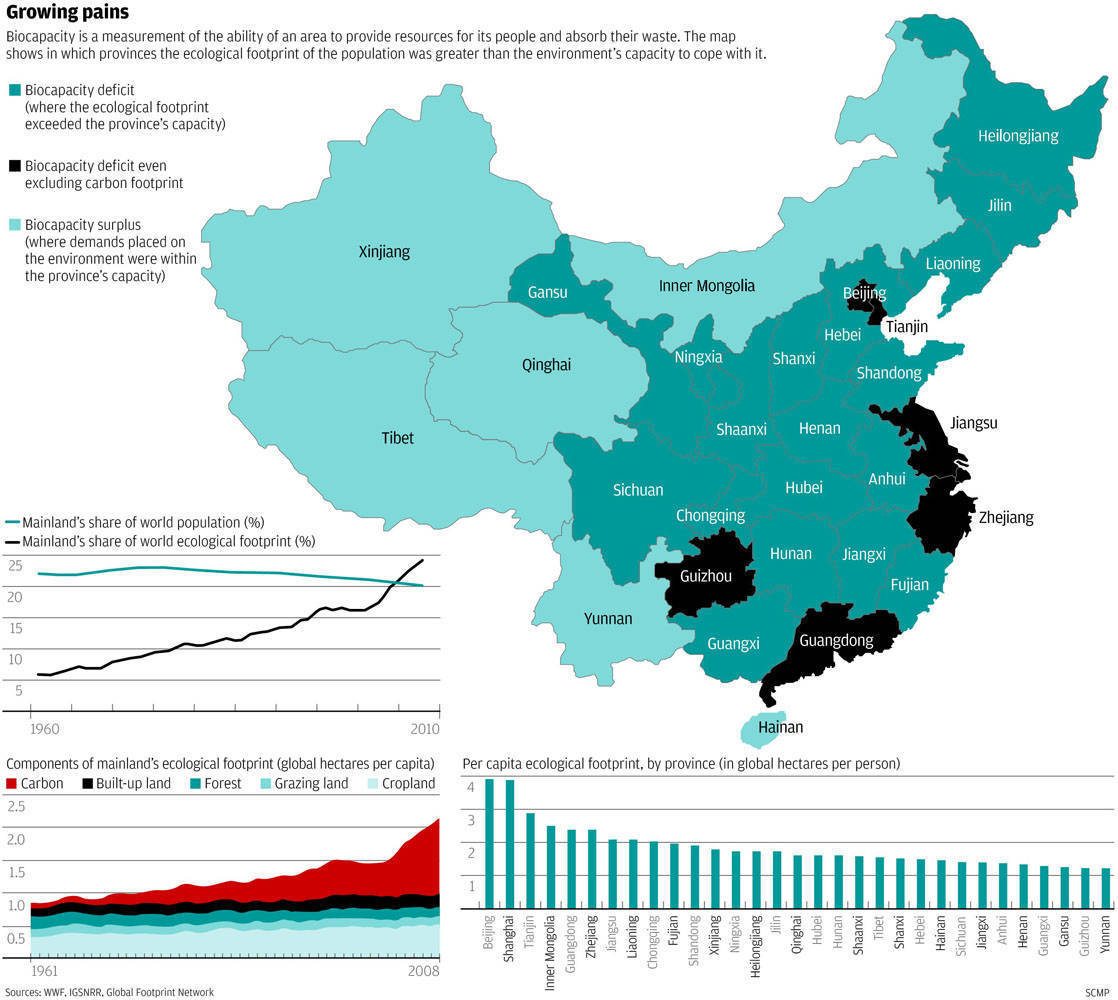
"[Although] China's ecological footprint - or the demand the country places on the natural environment - is lower than the global average, the nation is already consuming 2-1/2 times its bio-capacity - the capacity to regenerate natural resources and absorb carbon emissions," the report said.
Carbon remains the largest component of China's overall ecological footprint, increasing from 10 per cent in 1961 to 54 per cent in 2008, it said.
Most mainland provinces and municipalities are in a bio-capacity deficit, which occurs when insatiable human demands for resources and widespread degradation exceed the nation's ecological capacity.