Advertisement
Shinzo Abe
AsiaEast Asia

Analysis Mission accomplished? Japan is pulling its troops out of South Sudan but few believe Shinzo Abe’s explanation

The decision to pull out of South Sudan contrasts with China’s ongoing commitment to the UN mission

3-MIN READ3-MIN
In this November 21, 2016 file photo, members of the Japan Self-Defence Forces arrive as peacekeepers in South Sudan. Photo: AP
Julian Ryall

The Japanese government’s decision to withdraw its Self-Defence Forces (SDF) from their UN peacekeeping operation in South Sudan has raised a host of questions about the depth of Prime Minister Shinzo Abe’s commitment to global security.

Abe’s stated reason – that the peacekeepers’ mission to rebuild infrastructure destroyed by the ongoing civil war has been completed – met widespread scepticism, including from within the SDF.

Abe announced on Friday the 350-strong unit presently in South Sudan would be returning to Japan in May after a deployment lasting seven months.

Advertisement

“As South Sudan enters a new phase of nation-building, we have decided that we can now put an end to our infrastructure building efforts,” Abe said in Tokyo.
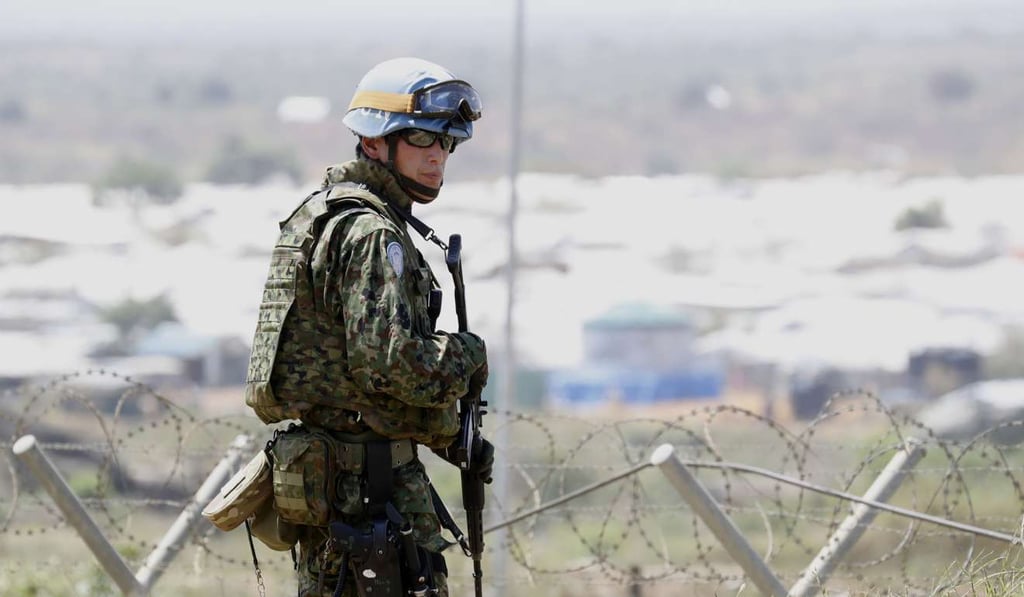
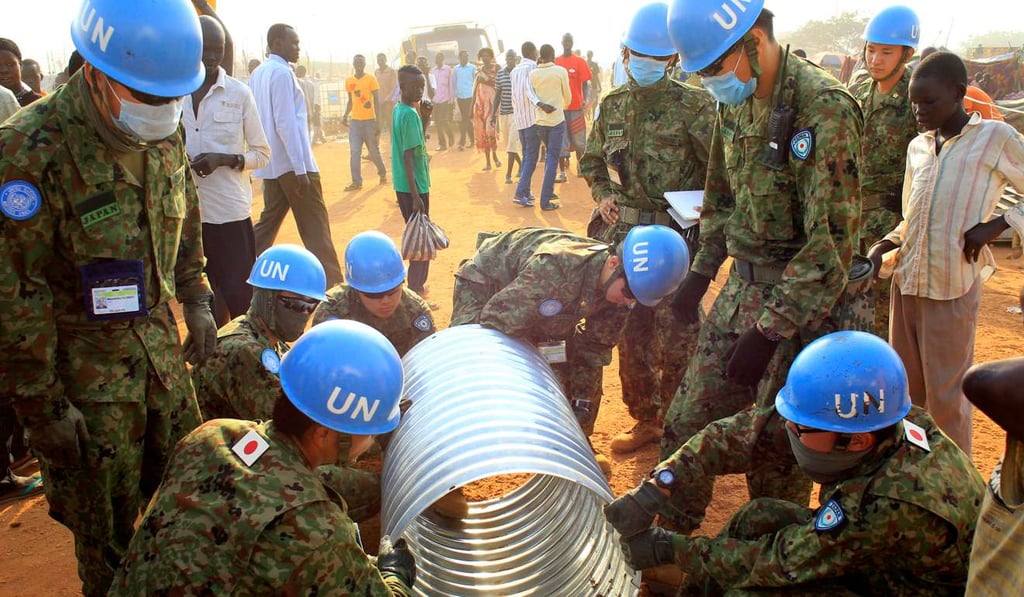
Yoshihide Suga, the chief cabinet secretary, was quick to emphasise the troops were not being recalled “because of the deteriorating security situation”. Some were unconvinced.
A Japanese ground Self-Defence Force soldier stands guard during peacekeeping operations in Juba, South Sudan. Photo: Kyodo
Advertisement
United Nations Mission in South Sudan (UNMISS) peacekeepers from Japan assemble a drainage pipe at Tomping camp, where some thousands of people who fled their homes following fighting were being sheltered by the United Nations, in Juba in 2014. Photo: Reuters
“If there was a casualty of any kind among the Japanese troops, then that would have spelled doom for Abe’s plans to expand Japan’s role and presence in future UN peacekeeping teams,” said Jun Okumura, a visiting scholar at the Meiji Institute for Global Affairs.
Advertisement
Select Voice
Select Speed
1.00x