Advertisement
Advertisement
Advertisement
Luxury

How Bahrain is preserving its centuries-old natural pearl industry: Qatar’s neighbouring state is the only country to ban the cultivation of artificial pearls to maintain its prized cultural tradition

STORYAgence France-Presse
A jeweller displays natural pearl earrings at the House of Pearls shop in Manama, on February 2. Photos: AFP
High Jewellery

  • While the cultivation of artificial pearls has flooded the market since the 1920s, Bahrain remains fiercely proud of its natural pearling tradition with pieces that can take years to complete
  • Faten Mattar, who works at her family-run jewellery shop, emphasises that each pearl is unique and that one of their goals is to create different lines to appeal to ‘a younger crowd’

Customers at a Bahrain jewellery store study displays of pearls that are, unusually, 100 per cent natural – the result of attempts to preserve a centuries-old industry.
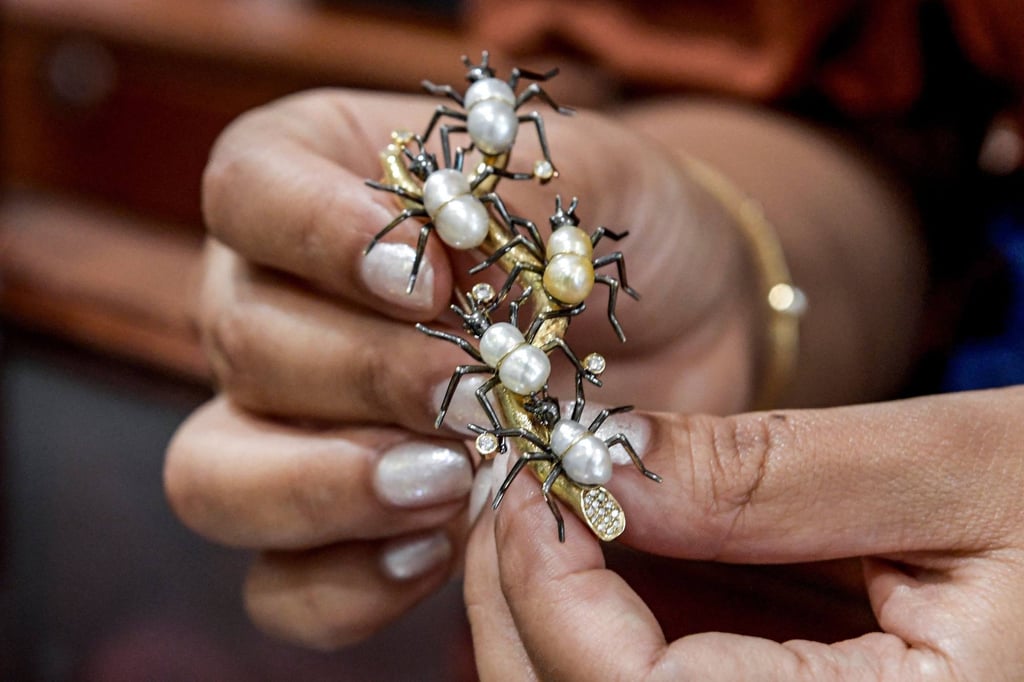
Faten Mattar of Mattar Jewelers displays an ant-shaped brooch made of natural pearls and 18k yellow gold at the House of Pearls shop in Manama, on March 19.
While rare elsewhere, natural pearls prised from seabed oysters by divers are the only variety produced in the Gulf kingdom, which is fiercely proud of its pearling tradition.

The cultivation of artificial pearls is banned in Bahrain
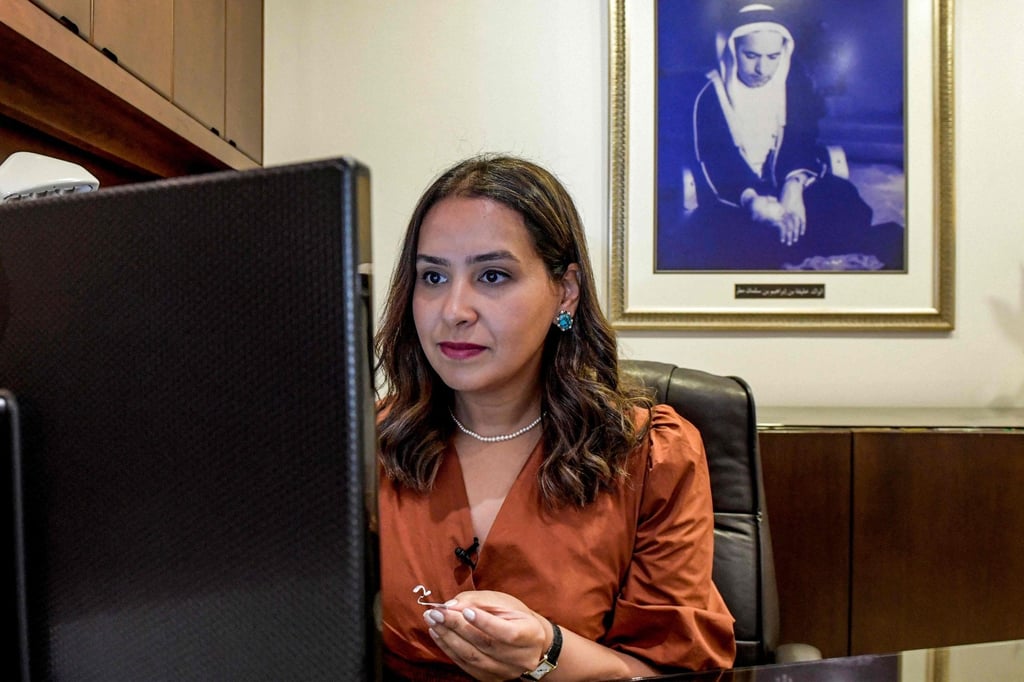
Faten Mattar of Mattar Jewelers looks up information for an item on her computer monitor, while behind her is shown a framed picture of her grandfather, Khalifa bin Ibrahim bin Salman Mattar, during an interview at the House of Pearls shop in Manama, on March 19.
Advertisement
Bahrain, a tiny island state neighbouring Qatar, is the sole country worldwide to have banned the cultivation of artificial pearls, which have flooded the market since the 1920s.

“We can’t mass produce,” said Faten Mattar, who works at the family-run jewellery shop. It can take up to five years to complete one strand of a necklace by sourcing pearls directly from divers, she said, admitting it is “a challenge”.

And larger pieces, which can go for up to US$25,000, might take more than a decade to complete.

No two natural pearls are identical
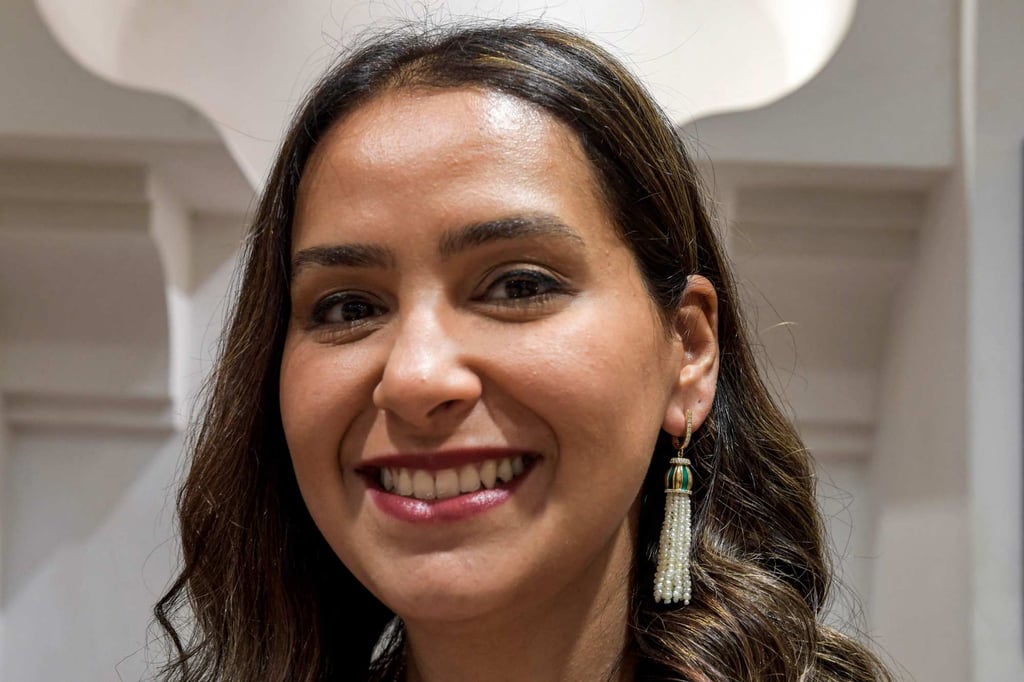
Faten Mattar of Mattar Jewelers displays natural pearls earrings at the House of Pearls shop in Manama, on March 19.

But with no two natural pearls identical, Mattar said that was part of the appeal: “Each person who owns or gets a piece of jewellery that contains natural pearls knows no one else has the same.”

Mattar is one of the first women to work in a family business that was established more than two centuries ago, making it one of the oldest in Bahrain.

Pearls adorn bracelets, necklaces, cufflinks and other items in the small store.
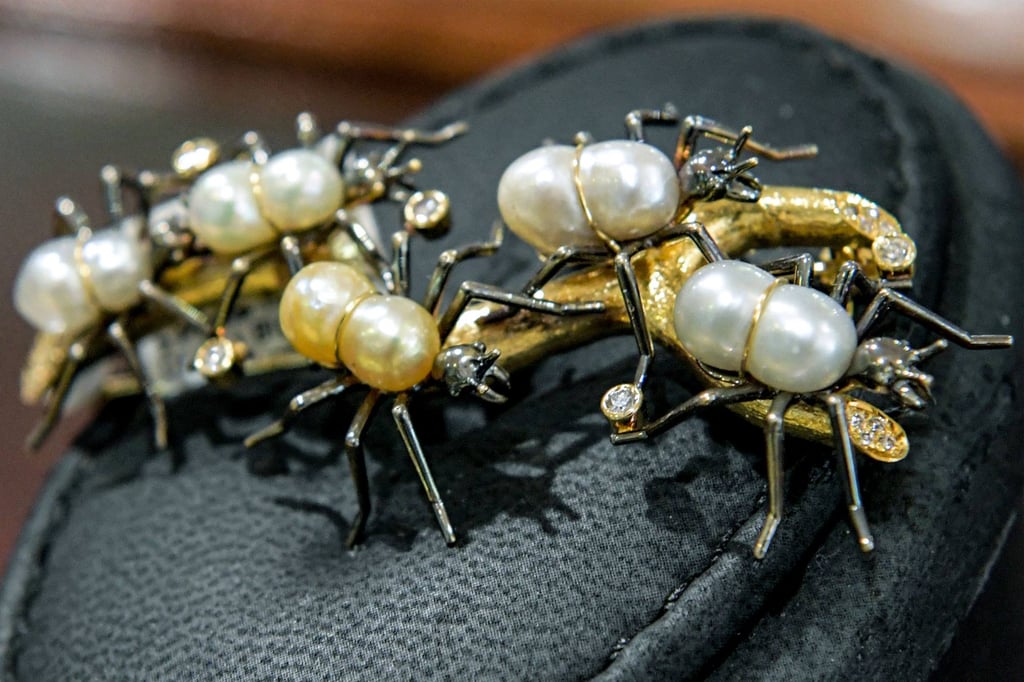
An ant-shaped brooch made of natural pearls and 18k yellow gold on display at the House of Pearls shop in Manama, on February 2.
“One of our goals is to make pearls more attainable for everyone, so we created different lines instead of having just big pieces,” she explained, mentioning designs for men and “daily jewellery for a younger crowd”.
Select Voice
Select Speed
1.00x