Who was 19th-century merchant Howqua, the ‘Chinese Bill Gates of his day’? The late tycoon once dominated China’s trade market as the richest man on Earth

- Today, China and Hong Kong boast over 600 billionaires including Jack Ma, Zhang Yiming and Li Ka-shing, but before them there was Howqua – so how did he make his fortune?
- Howqua’s net worth was estimated at US$26 million, today’s equivalent of several billion dollars, but John D. Rockefeller and other Americans eventually stole his ‘richest man’ title
Yet none have a position of financial primacy like Howqua, a Qing dynasty merchant who on the eve of the First Opium War (1839-42) was believed to be not just the foremost Chinese tycoon but the richest man on Earth.
Howqua and his family origins
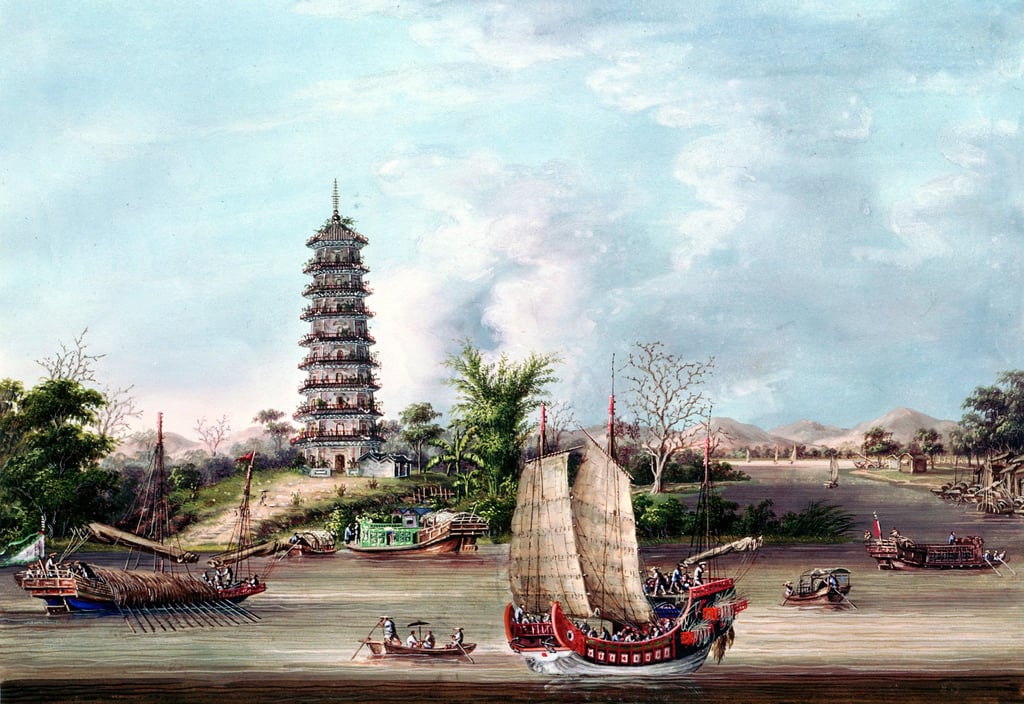
Although he would eventually be known to foreign traders as Howqua (or Houqua), the world’s one time richest man was born Wu Bingjian in 1769, the third of four surviving sons. He would in fact become the second Howqua since his father, Wu Guoying (1731-1800), was the first to hold that title.
Howqua’s family was originally from Fujian province, but the clan moved south to Guangdong during the reign of Emperor Kangxi (1661-1722). Without ancestors here, the Wus were viewed as outsiders in Guangdong and originally had to settle for living in Xiguan, a suburb outside Canton’s (modern Guangzhou’s) city walls.
Despite their position as outsiders, the Wus’ move to Canton was a shrewd decision. Throughout the 18th century, the port grew in wealth and importance as it attracted the bulk of international trade with Europe and the US – a position that was cemented in 1757 once the Qing government barred Western trade from all other ports. Then, in the 1780s, Wu Guoying founded the Yihe Company, the trading house that would bring his son Howqua to pre-eminence.
Rise to fortune
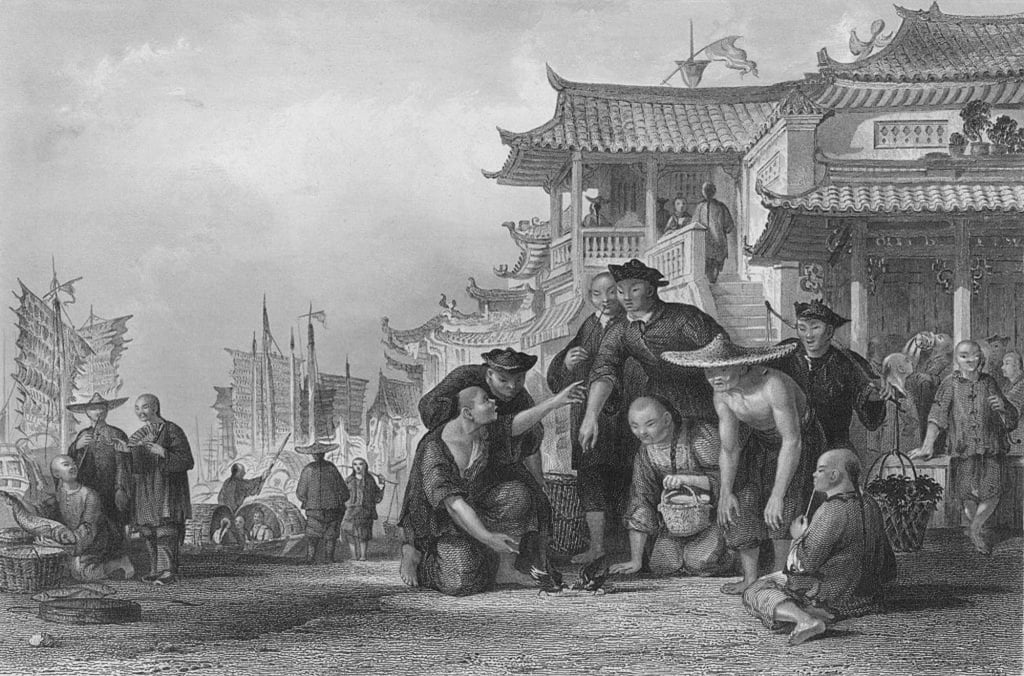
The source of Howqua’s wealth lay in what became known as the Canton System, which governed all of China’s foreign trade from 1759 to 1842. This system restricted foreign merchants to a small area outside Canton and dictated that they could only deal with 13 Hong merchants, known collectively as the Cohong, who were officially appointed by the Chinese authorities.
In 1834, Howqua’s wealth was estimated to be US$26 million, the equivalent of several billion modern US dollars
In theory, this granted Hong merchants a monopoly on foreign trade. It promised great wealth but bankruptcies were not uncommon. Not only did the Hong merchants have to pay handsomely for their position, they were expected to bankroll local officials on an ongoing basis. And none of this guaranteed these merchants wouldn’t make mistakes that could ruin them.
Howqua, however, became renowned among the foreign traders for his acumen and honesty. And his name has been most remembered among foreign historians and writers. To Westerners, he embodied the best of the romantic “Old China Trade” that ended soon after the First Opium War with the opening of the Treaty Ports.