
Reflections | What’s in a name? A lot, if you’re Prince Andrew, or a minister or official in imperial China, where rigid hierarchy was the rule
- At one time in China, ministers were not allowed to speak directly to the emperor or address any superior by name
- To avoid confusion, they were later allowed to address the emperor as bixia or ’your majesty’, while his family were ‘dianxia’

Most humiliating for Andrew, as the son of a reigning monarch, he will no longer be styled “His Royal Highness” in any official capacity, though he retains the title. What this means is that Andrew could probably demand that he still be addressed as “His (or Your) Royal Highness” in private by his associates, staff and servants, but in public, he’ll just be plain Prince Andrew, or an equivalent form of address, without the HRH status marker.
Such status markers were very important in imperial China, or other feudal societies, because they put everybody in their place in a rigid social hierarchy. As one could not address one’s social superiors by name in China and personal names were seldom used in polite conversation, these titles became a convenient form of address when speaking or corresponding with another person.
At the very top of the hierarchy was the emperor and the Chinese used a very interesting word to address this person: bixia. Often translated as “His (or Your) Majesty”, bixia literally means “at the foot of the crimson steps leading up to the throne”.
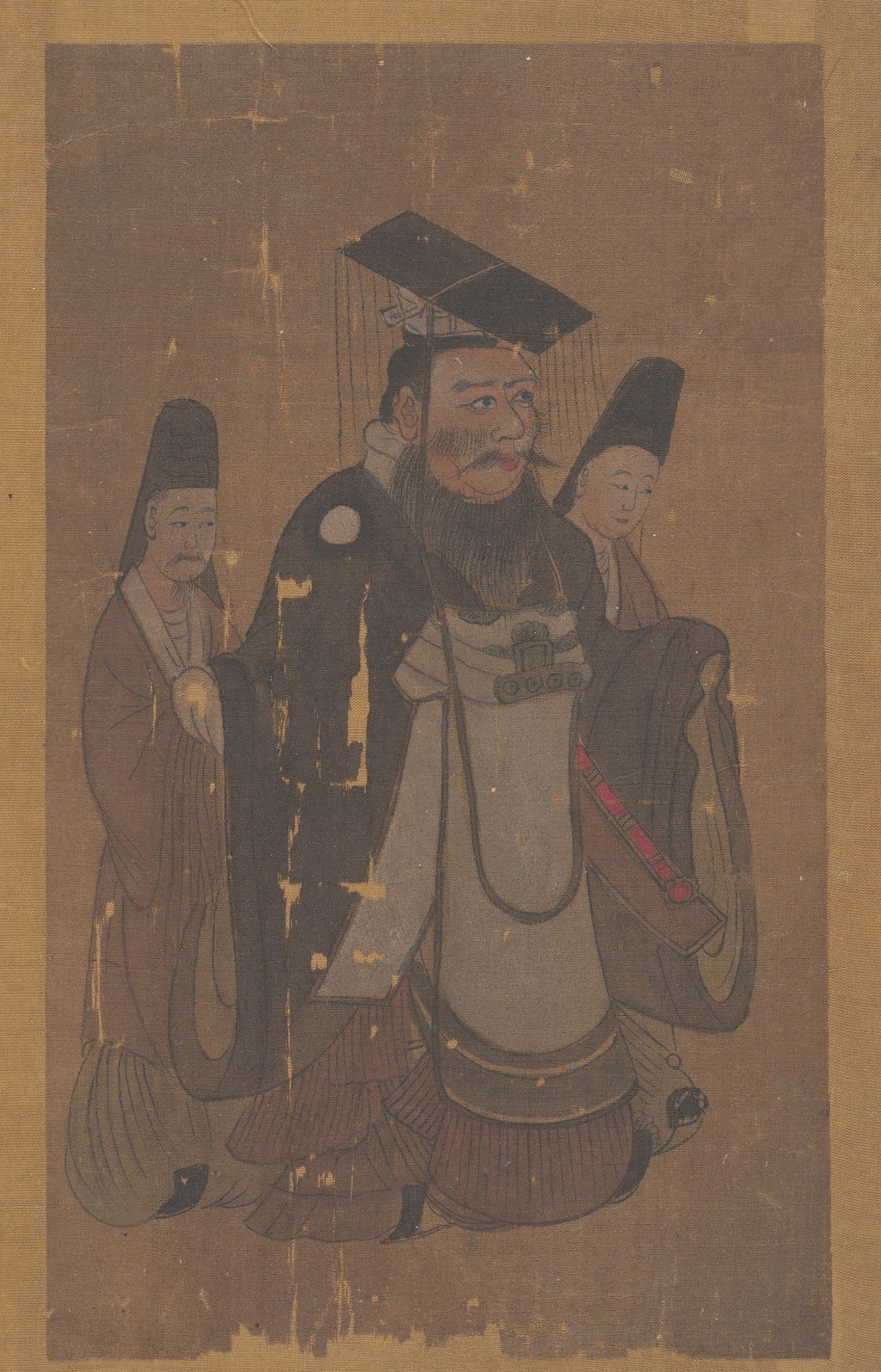
In high antiquity, ministers and officials were not supposed to speak directly to the monarch. When the ruler held court, his minions had to give their reports and counsel by speaking to his attendants standing at the foot of the red-painted steps leading up to the elevated throne. The attendants would then convey the spoken message to the ruler.