
Language MattersHow the Chinese word for ‘comrade’ came to refer to the LGBT community, despite communist association
Strongly associated with communism, the meaning of the word ‘comrade’ has evolved over the centuries
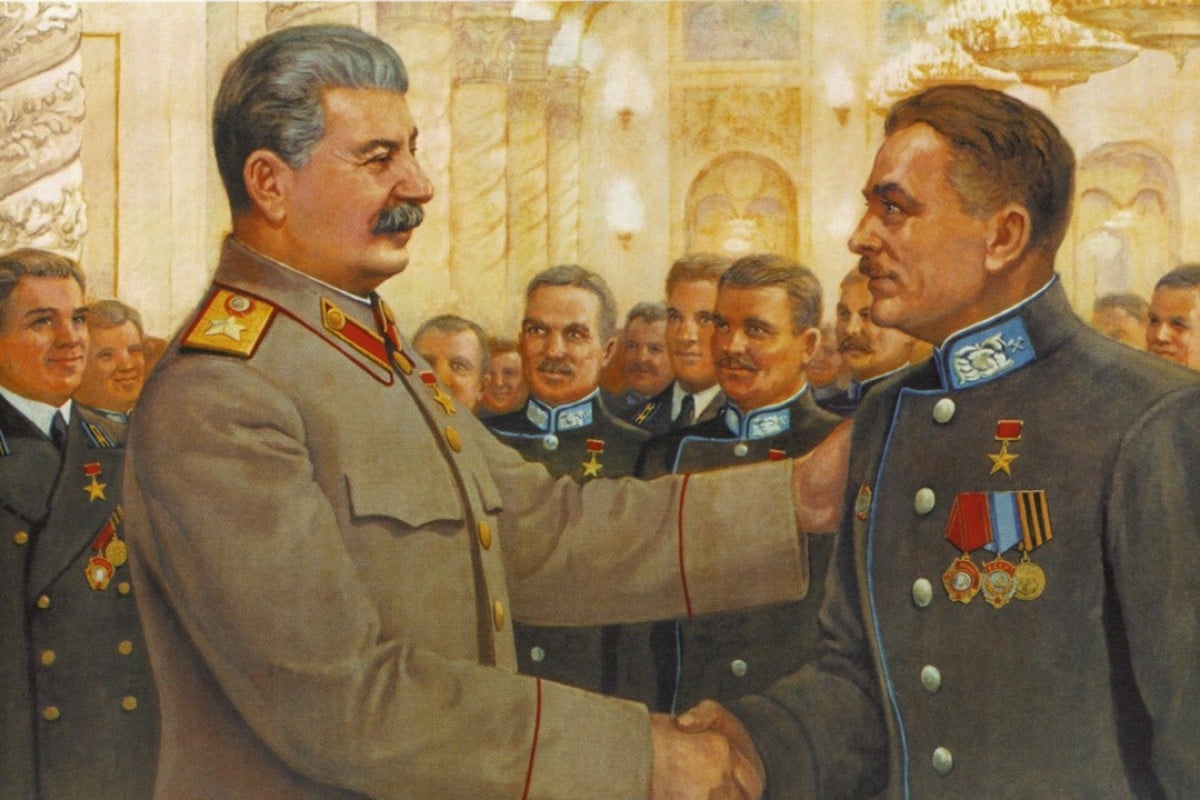
As of this month, Communist China has been a one-party state longer than the Soviet Union was in existence. Do svidanya, comrade.
The word “comrade” has its roots in the 16th-century French camarade/camerade and Spanish camarada, ultimately from the Latin camera (“chamber” – originally “chamberful”, then “chamber mate”).
Its earliest English attestation is camarades, in 1591; this meaning of tent-fellow persists in the military, but the word has broadened to encompass more generally an associate in friendship, occupation, or fortunes, a close companion. A comrade-in-arms is not just a fellow soldier but one who has worked for the same cause and shared similar difficulties.
In Australian English one finds “cobber” (meaning companion, friend, mate), first documented in the 1890s. This has been traced to the Yiddish chaber (“comrade”), which entered London slang by way of the East End’s Jewish population, and from there travelled with British migrants to Australia.
“Comrade” is most notable for having been adopted as a surname prefix by socialist and communist movements in the second part of the 19th century, to avoid titles and acknowledge a fellow socialist or communist. In South Africa in the early 1990s, “comrades” came to be used for politically motivated township youth, especially those involved in civil disorder.
The equivalent of “comrade” in Mandarin is tongzhi, the characters meaning “same will/purpose”: originating in the Qin dynasty (221-206BC), the term became a form of address during the Chinese Communist Party’s drive to power (1921-49) and well into the 80s, signalling solidarity, equality and respect among the revolutionaries. The term’s popularity began to wane after 1978, as China’s economy began to open up. In an attempt to address this, in 2016, the Communist Party issued a directive that members were to replace titles and honorifics with the democratic, unisex greeting tongzhi.
In the interim, though, the term had taken on a new meaning. First adopted by a Hong Kong columnist and an organiser of the city’s inaugural Lesbian and Gay Film Festival, in 1989, tongzhiwas appropriated by homosexuals as a positive and gender-neutral term, preferable to tongxinglian (“same-sex love”), with its clinical, pathological connotations.