How to make cabbage kimchi – traditionally made during winter, the Korean staple can be enjoyed anytime
- Fermenting vegetables in the colder months ensured that there was enough food to last until spring
- Friends and families gather together to make enormous amounts, which are partially buried
In Korea, one of the traditional activities that takes place as winter sets in is kimjang (also spelled gimjang). Back in the old days, before refrigerators were invented, when you had to ensure you had enough food to last until spring, family and friends would get together to make enormous amounts of kimchi. This would then be placed in vats partially buried in the frozen ground, which would help to preserve the contents.
These days, with fresh ingredients available year-round from across the world, kimchi can be made any time. It is still best made in winter, though, when the baechu (napa cabbage) and mu (daikon) are large, heavy and sweet.
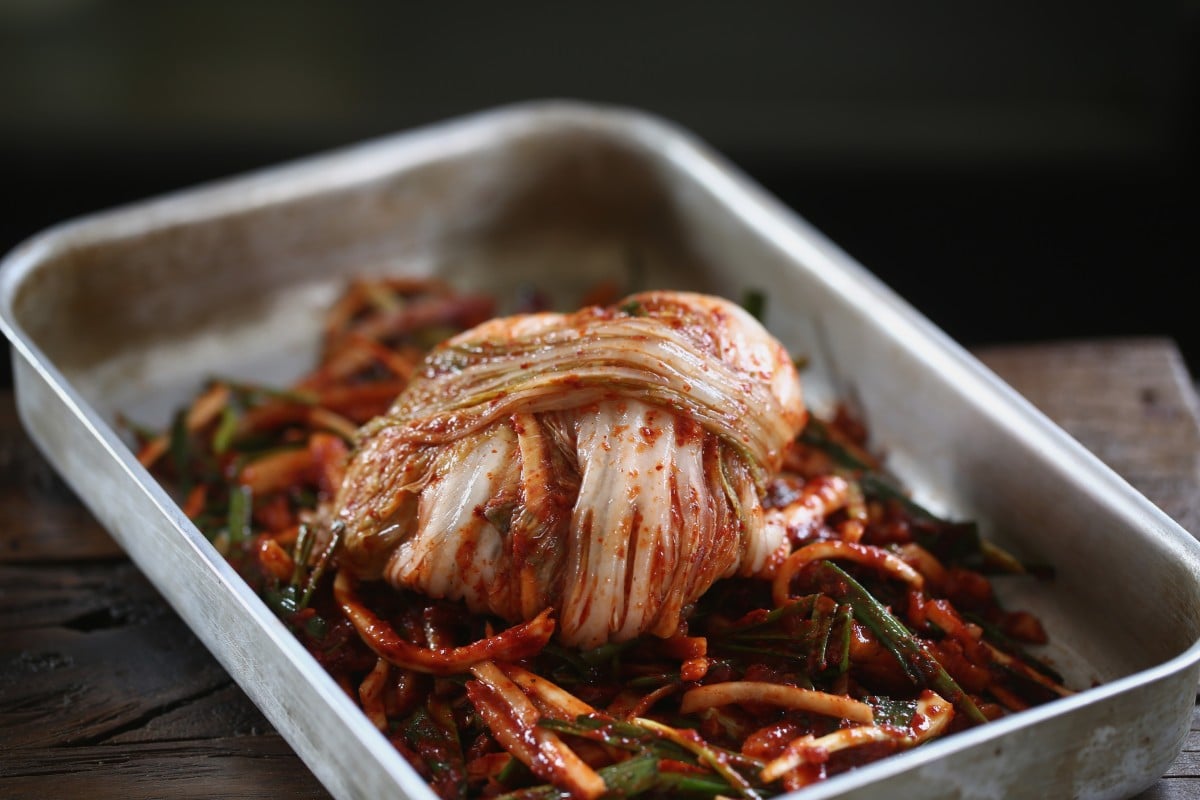
Baechu (cabbage) kimchi
I visit the Korean supermarkets in Hong Kong to buy imported cabbage and daikon, instead of buying them from the local wet markets, because you want the short, fat specimens of both vegetables. While you are there, you should also buy the gochugaru (Korean chilli flakes), salted shrimp (tiny shrimp in brine, sold in jars), bellflower roots (sold in packs in the fresh vegetable section), anchovy sauce (it is more pungent than Thai and Vietnamese fish sauces), glutinous rice flour and Korean pear. If you can’t find bellflower roots, use carrot – peeled and cut into thin matchsticks – instead.
In the spirit of kimjang, this recipe makes a lot of kimchi. I keep some for myself and give the rest to friends. The kimchi base is enough for 3.5kg to 4.5kg of cabbage. If you have the lesser amount of cabbage, set aside some of the kimchi base and use it to make other types of banchan (side dishes).
Sufficiently salting the cabbage is the essential first step – leave plenty of time or the salt won’t penetrate and soften the leaves. If the cabbage isn’t sufficiently salted, the kimchi will turn rotten. I use about 40 grams of salt per kilo of cabbage.
Traditional Korean kimchi makers believe that using bare hands to spread the chilli paste over the cabbage leaves adds more flavour but I wear disposable gloves – they prevent the paste from staining your fingers. And instead of putting the kimchi into traditional earthenware containers, modern kimchi makers are using plastic containers with lockable lids, which fit more compactly into the fridge. You can also use wide-mouthed glass jars.