
Then & Now | How art depicting southern Chinese scenes, by George Chinnery and others, became sought after, as did catalogues of collections such as that of Sir Paul Chater
- Travelling artists understood the tastes of their expat merchant and official clients, and made multiple depictions of the same China Coast scenes
- Businessman Sir Paul Chater amassed a big collection of such work by George Chinnery and others, a catalogue of which became a collector’s item in its own right

From vibrant oil paintings and delicate watercolours to detailed pen-and-ink drawings and exuberant pencil sketches, scenes drawn directly from China Coast life have provided inspiration to artists from the earliest 16th century European maritime arrivals.
By the late 18th century, an established pattern had evolved, as travelling artists created multiple versions of similar works for sale.
Works by William and Thomas Daniell, Auguste Bourget, and in particular, George Chinnery, the Anglo-Irish painter who settled in Macau in 1825 and lived there until his death, in 1852, became keenly sought-after collector’s items within their own lifetimes.
Technically competent, aesthetically pleasing, they accurately portrayed images of China Coast scenes which were familiar to the prosperous merchants, country traders, administrators and officials who had lived for large tracts of their lives in this part of the world and were these artists’ target market.
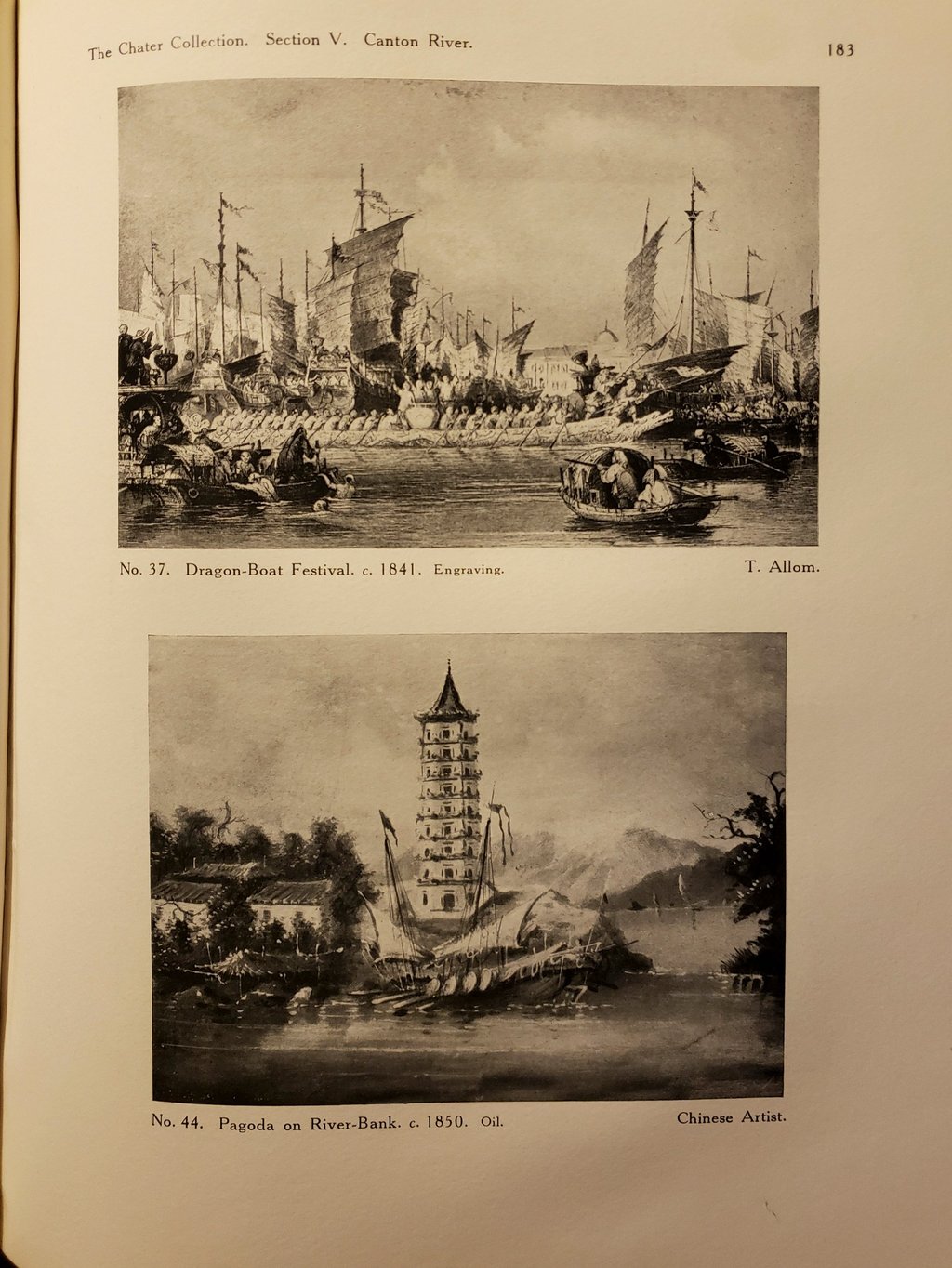
Over time, a distinct artistic category – known as China Trade – evolved. Commercial imperatives overrode artistic expression and consequently, subjects that had sold best were what an artist mostly produced; in turn, this realistic aspect accounts for some superficial “sameness” found across the genre.