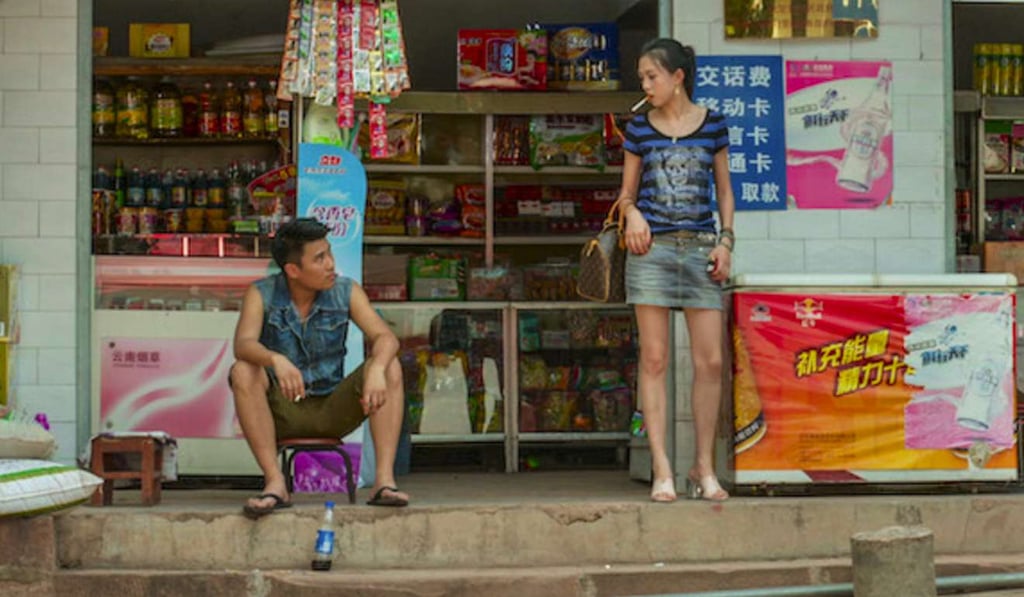
With five Chinese films receiving their world premieres at the Berlin Film Festival (February 9 - 19) this year, cultural apparatchiks in Beijing should have been loudly celebrating their triumph in the pursuit of soft power. But there’s been hardly a murmur in the state-run media – perhaps because the titles stray from the officially endorsed narrative of China as a sunny, strong nation on the rise.
In Yang Heng’s rural drama Ghost in the Mountains, listless youths plunder and kill with barely a thought for their victims. In Huang Ji and Ryuji Otsuka’sFoolish Bird, corruption overwhelms a young stolen-goods peddler’s attempt to enrol in a police academy. A materialist woman despairs of her provincial hometown’s backwardness in Song Chuan’sCiao Ciao. A mobster’s henchman tries to hunt down an embezzling hoodlum in Liu Jian’s animated film Have a Nice Day, while medical staff struggle to contain and cure patients at a mental asylum in Ma Li’s documentary Inmates.
Advertisement
Zhou Quan (left) and Liang Xueq in Ciao Ciao, by Song Chuan.
Troubling visions of China, certainly, but they are films that still fall within the tolerance of the country’s censors. However, there was a film in Berlin that could have been of more concern to mainland officials – and it’s a non-Chinese production.
Advertisement
In his documentary In the Intense Now, Brazilian filmmaker João Moreira Salles includes footage his mother filmed during her visit to China in 1966, when the country was spiralling towards mayhem at the onset of the Cultural Revolution. Wearing clothes and expressions that contrast starkly with those of the locals around them, the tourists visit historical sites covered with revolutionary “big letter posters”; in one case, they gleefully peer into a temple that has been vandalised by Red Guards.