How viewing of ‘penguin parade’ on Australia’s Phillip Island puts the birds first, with secure spectator areas, low lights and ban on photos
- When nine of the 10 little penguin colonies on Phillip Island had been wiped out by the 1980s, drastic action was required to save the remaining one
- A visitor centre for watching the birds’ nightly emergence from the sea was built, with viewing areas, special lighting and a ban on photography

Seeing penguins, not in a zoo or aquarium but in their natural habitat, takes some determination; the icy wind coming off the Bass Strait reminds us on this winter night that this part of Victoria, Australia is not far from the world’s southernmost continent: Antarctica.
Of the 18 species of penguin, nine live in the Antarctic and on sub-Antarctic islands. The smallest species, however, known as little penguins and sometimes as fairy penguins, lives more conveniently along the coasts of New Zealand and southern Australia.
When not out foraging at sea, the largest colony of little penguins, around 40,000 strong, can be found on Victoria’s Phillip Island.
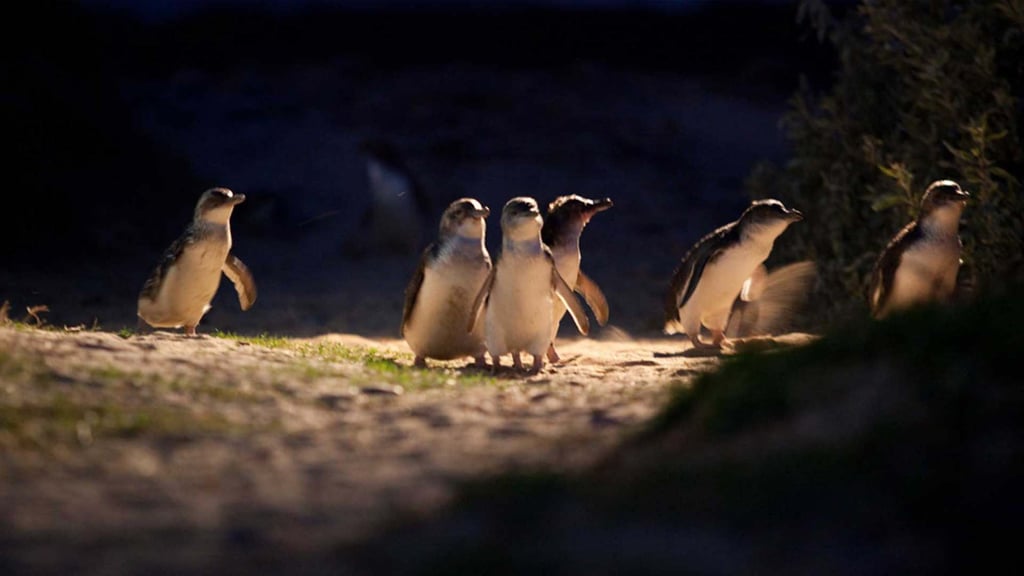
Every night, about 10 per cent of them emerge from the crashing surf to cross the sand as they return to their burrows in the coastal scrub; a “penguin parade” that has made the 101 sq km (39 square mile) island internationally renowned.
Some 140km (87 miles) southeast of the state capital, Melbourne, Phillip Island is also home to around 13,000 humans, who appreciate its laid-back lifestyle. Australian fur seals thrive along its rugged coastline, and migrating whales help attract more than two million visitors to the island each year.