Advertisement
How BTS and Blackpink Spotify streams add to climate-change problem – the energy used generates annual carbon emissions so big, whole forests need planting to offset them
- Streaming music produces carbon emissions. In K-pop’s case, 2021’s top songs on Spotify, all by BTS and Blackpink, require 760,000 trees planting to offset them
- K-pop fans often plant trees to celebrate their idols’ birthdays, but the scale of this task is beyond them and needs to involve streaming platforms
Reading Time:2 minutes
Why you can trust SCMP
1

In the world of streaming, your favourite K-pop artist’s songs may be fuelling carbon emissions.
Between mass streaming and growing album sales, both of which are great for artists but less so for the environment under current modes of consumption because of the energy they use, K-pop fans and artists alike are increasingly engaging with conversations about climate change.
In 2021, BTS spoke about taking climate action at the United Nations, while Blackpink were named advocates of the UN’s Sustainable Development Goals. The fan-run activist group K-pop4Planet also kicked off last year, trying to raise awareness of climate action; fans of K-pop stars have a long history of planting forests to mark the birthdays of their favourite stars and other special occasions.
Advertisement
But with more music being consumed than at any time in history, hitting it big on streaming platforms also means hitting it big in energy consumption. That applies as much to K-pop performers as to those of any other musical genre.
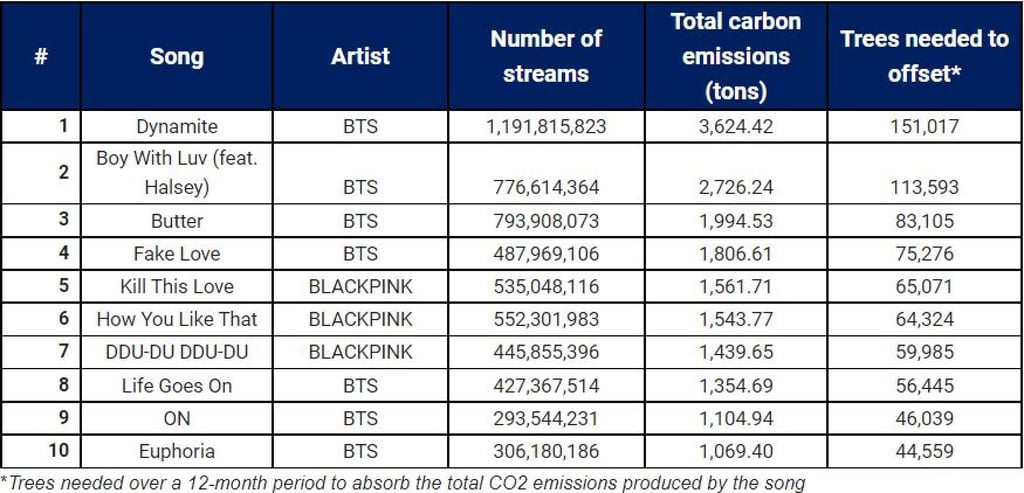
Though no individual music listener’s impact is typically that intense, the popularity of certain artists and songs on streaming platforms like Spotify result in immense energy consumption, as does common K-pop fandom behaviour that promotes mass streaming to boost the chart rankings of artists.
Advertisement
Advertisement
Select Voice
Choose your listening speed
Get through articles 2x faster
1.25x
250 WPM
Slow
Average
Fast
1.25x