
F Scott Fitzgerald’s The Great Gatsby is one of the most enduring 20th century novels. First published in 1925, the tragedy lays bare the glamour and perils of pursuing the ever elusive American Dream. In the decades since, the novel has been a staple in the American high school syllabus alongside Mark Twain’s Huckleberry Finn and JD Salinger’s The Catcher in the Rye.
Every year I teach The Great Gatsby to 11th and 12th graders. One of the first things I point out to my students is the novel’s relevance in today’s world. Despite its setting in the Jazz Age – the decade between the first world war and the Great Depression and arguably the most romantic time in all of American history – its depiction of the nouveau riche, the yawning gap between the have’s and the have-not’s and a society on the brink of moral and economic collapse all rings true to observers of modern China.
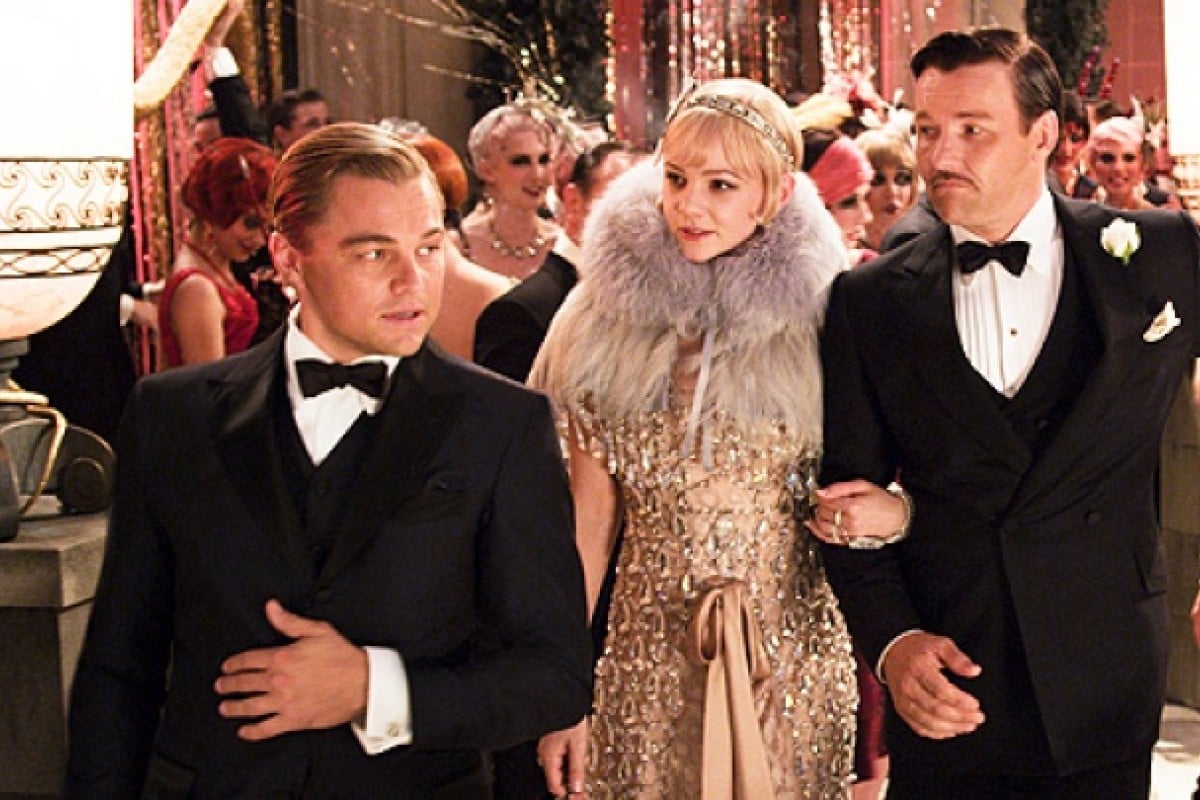
The Great Gatsby has seen multiple film adaptations, most notably the 1974 version starring Robert Redford and Mia Farrow. As if the fifth time is the charm, Australian director Baz Luhrmann, known for his bold spectacles, decides to take another stab at it. Watching a Luhrmann film, whether it is Romeo + Juliet, Moulin Rouge! or the Broadway adaptation of La Boheme, is like going to the Cirque du Soleil. It is an assault on the senses by eye-popping sets, shimmering costumes and a menagerie of musical numbers.
Luhrmann does just that with The Great Gatsby. He turns the volume button way up and drags the colour saturation dial to the max. The result is a 3D extravaganza of overflowing champagne, anachronistic hip-hop music and dazzling art deco opulence. The film is every bit as decadent as the Jazz Age itself.
Luhrmann by and large stays close to Fitzgerald’s original story, with the exception of the framing device he invents for better story-telling on the silver screen. The film opens with Nick Carraway, the narrator-in-chief, recounting his traumatic experience in New York City from a rehab facility. This then allows the rise and fall of the mysterious billionaire Jay Gatsby to play out in much the same way it does in the novel. Fitzgerald fans will be pleased to see that the movie leaves intact all the literary symbolism that runs through the story, including the green light in East Egg, the clock on Nick’s mantlepiece and Dr TJ Eckleburg’s giant eyeglasses. Important scenes like the Gatsby-Daisy reunion and the Plaza Hotel confrontation are treated with care and dramatic tension.