Debt funds dominate China’s first-quarter sales as monetary easing hopes trigger spectacular bond rally
- Bond funds returned an average of 1 per cent in the first quarter of 2024, while stock funds made losses of 2.2 per cent on an average, according to BOC International
- Half of the 300 constituents of the CSI 300 Index that have released annual reports, fell short of consensus estimates

Bond funds dominated new mutual-fund issuances in the first quarter in China, as policy loosening hopes drove investors to haven assets and as a nascent recovery in stocks remains fragile after an unprecedented three years of losses.
Fixed-income products made up three quarters of the 243.4 billion yuan (US$33.6 billion) mutual-fund issuances in the first three months of 2024, according to data from Wind Information. Equity-focus funds accounted for about 14 per cent of the offerings and balanced funds, which invest in both stocks and bonds, accounted for the rest, the data showed. The total size of newly launched funds fell almost 6 per cent from a year ago.
China’s mutual-fund industry was valued at 27.5 trillion yuan at the end of March, an increase of 6.6 per cent from the end of 2023, according to BOC International. Bond funds totalled 9.2 trillion yuan and money-market funds aggregated 11.3 trillion yuan, it said. Stock-focused funds totalled 2.6 trillion yuan at the end of the first quarter.
“Yield-seeking investors have been moving their cash into bond funds for CGB (central government bonds) investment in the hopes of further monetary policy easing and low expectations of domestic growth/inflation,” analysts at Goldman Sachs said in a report.
“Given deflation fears and ongoing property/LGFV deleveraging, we expect China’s interest rates to drift lower over the medium term (6-12 months).” LGFVs or local government financing vehicles are state-owned entities that borrow money on the government’s behalf.
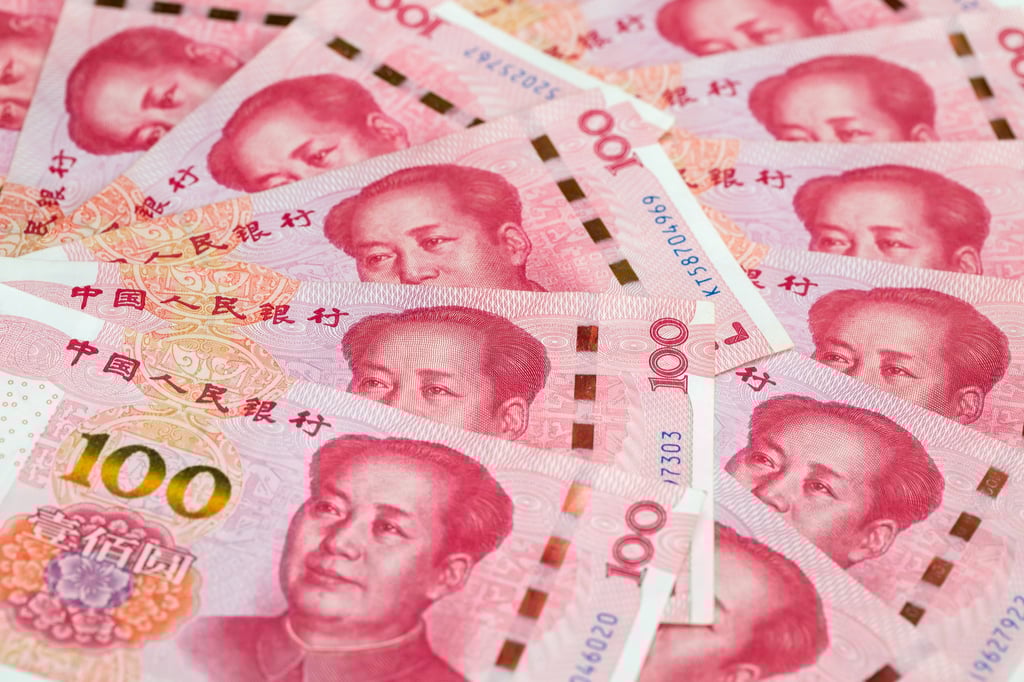
Bonds were one of the few yuan-denominated assets that produced a stellar performance in the January-to-March period, as investors piled into debt markets after weak economic data fanned speculation about interest rate cuts to support growth. China’s benchmark 10-year sovereign bond prices, which move inversely to yields, surged and the yield fell 26.6 basis points to 2.295 per cent for the best quarterly performance in five years.