
Inside Out | The world’s paying too high a price for inequality … and it needs to be addressed quickly
- Joseph Stiglitz believes a vicious spiral has been created because of the economic inequality
- Economic inequality translates into political inequality, which leads to rules that favour the wealthy, which in turn reinforces economic inequality

Joseph Stiglitz at Columbia University reminded us in the Scientific American this month that just three Americans – Jeff Bezos, Bill Gates and Warren Buffett – account for more wealth than the entire poor half of the US population.
As I watched the six pallbearers bringing Walter Kwok Ping-sheung’s coffin out of St John’s Cathedral last Thursday, I wondered what share of Hong Kong’s wealth they accounted for. Maybe not half, but probably not far short.
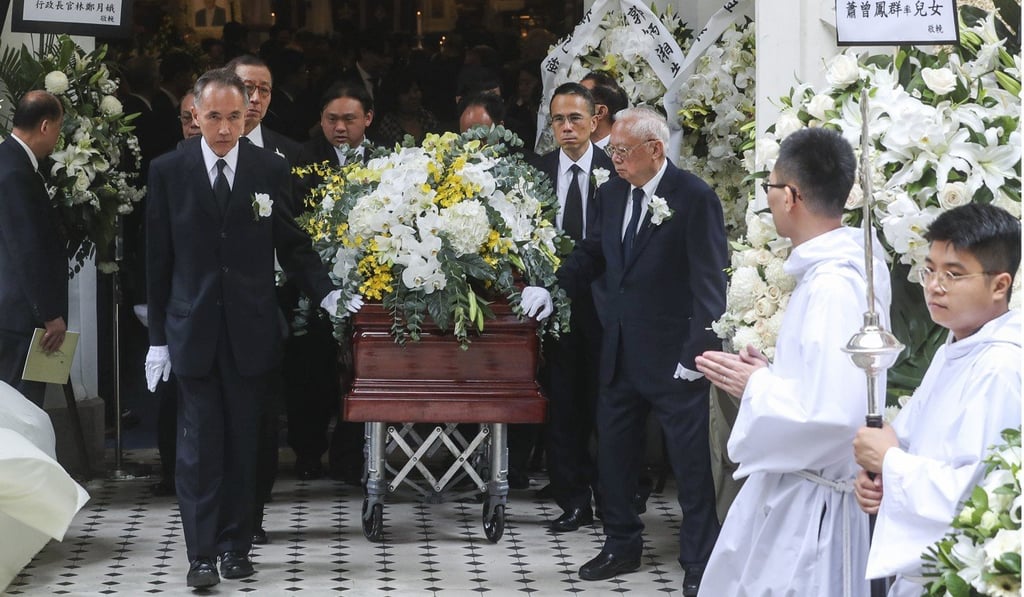
As Donald Trump stirs his base ahead of midterm elections with fearmongering over a raggle-taggle band of would-be immigrants wandering through the Mexican countryside towards the US border, claims of victimhood in international trade, and the rise of a modern yellow peril, one has to wonder what has happened to the issue that is truly eating the US from within – extreme and entrenched inequality.
As Stiglitz noted in the Scientific American: “By most accounts, the US has the highest level of economic inequality among developed countries. It has the world’s highest per capita health expenditures yet the lowest life expectancy among comparable countries. It is also one of a few developed countries jostling for the dubious distinction of having the lowest measures of equality of opportunity.”
While the income share of America’s top 0.1 per cent has quadrupled over the past 40 years, the income share of the top 1 per cent has doubled, and that of the bottom 90 per cent has declined. How can it seem reasonable that the average US CEO earns more than 300 times what the average worker earns, or in the UK that the average FT 100 CEO earns 229 times?